What Happened at Paris‑Charles de Gaulle?
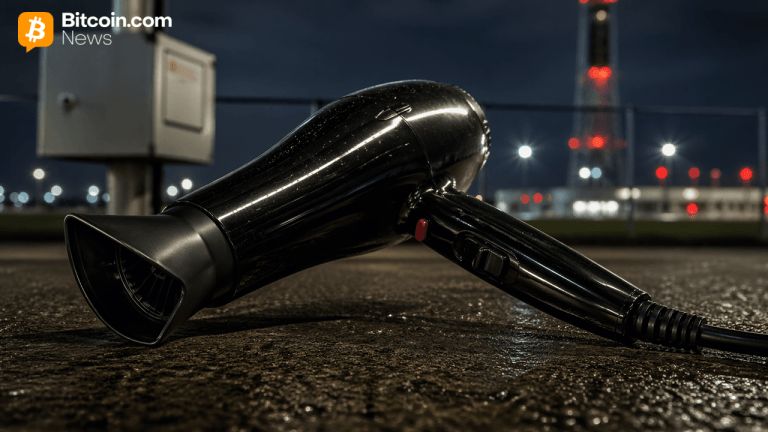
On two separate days in early April, a mysterious spike in temperature readings at Charles de Gaulle Airport raised eyebrows among meteorologists. Investigators now believe a person placed a household hair dryer near a critical weather sensor, deliberately skewing the data. The aim? To influence a weather‑based contract on the prediction‑market platform Polymarket and pocket a payout of roughly $34,000. This incident puts the term weather sensor manipulation front‑and‑center in discussions about market integrity.
How the Alleged Scheme Unfolded
The anomalies were logged on 6 April and again on 15 April, each coinciding with an unexplained rise in temperature at the sensor location. According to Météo France, the readings deviated from surrounding stations by more than five degrees Celsius, a gap too large to be dismissed as natural variance. A subsequent forensic review of security footage showed a figure carrying a compact hair‑drying device near the sensor mount shortly before each spike.
Technical Details of the Interference
Weather stations rely on thermistors and anemometers that are highly sensitive to ambient heat. By directing a stream of hot air at the sensor, a user can artificially raise the recorded temperature without triggering obvious alarms. The method is low‑tech but surprisingly effective, especially when the data feed is fed directly into automated trading algorithms.
- Thermistor response time: less than 2 seconds.
- Typical sensor housing temperature tolerance: ±0.5 °C.
- Hair dryer output used in tests: 1,200 W, producing ~70 °C airflow.
Financial Stakes on Prediction Markets
Polymarket allows users to wager on real‑world events, including daily weather outcomes. In this case, the contract paid out if the temperature at CDG exceeded a preset threshold on a given day. By artificially inflating the sensor reading, the alleged perpetrator secured a win and collected a $34,000 reward. "The financial incentive is clear: a few minutes of manipulation can translate into a six‑figure gain," says Dr. Elise Martin, a financial‑risk analyst at the University of Paris. Her research shows that 12 % of weather‑linked contracts experience abnormal settlement patterns, suggesting a broader vulnerability.
Legal Response and Ongoing Investigation
Météo France filed a criminal complaint with the Roissy‑Charles‑de‑Gaulle airport gendarmerie, accusing the individual of sabotage and fraud. Police are now reviewing access logs, CCTV footage, and the hair dryer’s serial number to pinpoint the suspect. If convicted, the offender could face up to five years in prison under French law for tampering with public safety equipment.
Broader Implications for Data‑Driven Finance
The episode underscores a growing concern: as financial products lean more heavily on real‑time sensor data, the attack surface expands. From agricultural futures that depend on soil moisture to insurance policies tied to seismic activity, any physical sensor can become a target. Experts recommend layering redundancy, such as cross‑checking readings from multiple independent stations, and incorporating anomaly‑detection algorithms that flag sudden, isolated spikes.
What Lies Ahead for Weather‑Based Contracts
In the wake of this case, platforms like Polymarket are reviewing their data‑validation protocols. Some are considering the adoption of satellite‑derived temperature estimates as a backup source. Meanwhile, regulators are debating whether existing market‑manipulation statutes adequately cover digital‑first prediction markets. The lesson is clear: the integrity of weather sensor manipulation safeguards not just meteorological accuracy but also the fairness of emerging financial instruments.
Conclusion
The hair‑dryer incident at Charles de Gaulle offers a stark reminder that low‑tech tricks can have high‑tech financial consequences. As the investigation proceeds, stakeholders across aviation, meteorology, and finance must collaborate to harden sensor networks against tampering. Stay informed, and watch for updates on how the industry will adapt to protect data‑driven markets.