Executive Summary
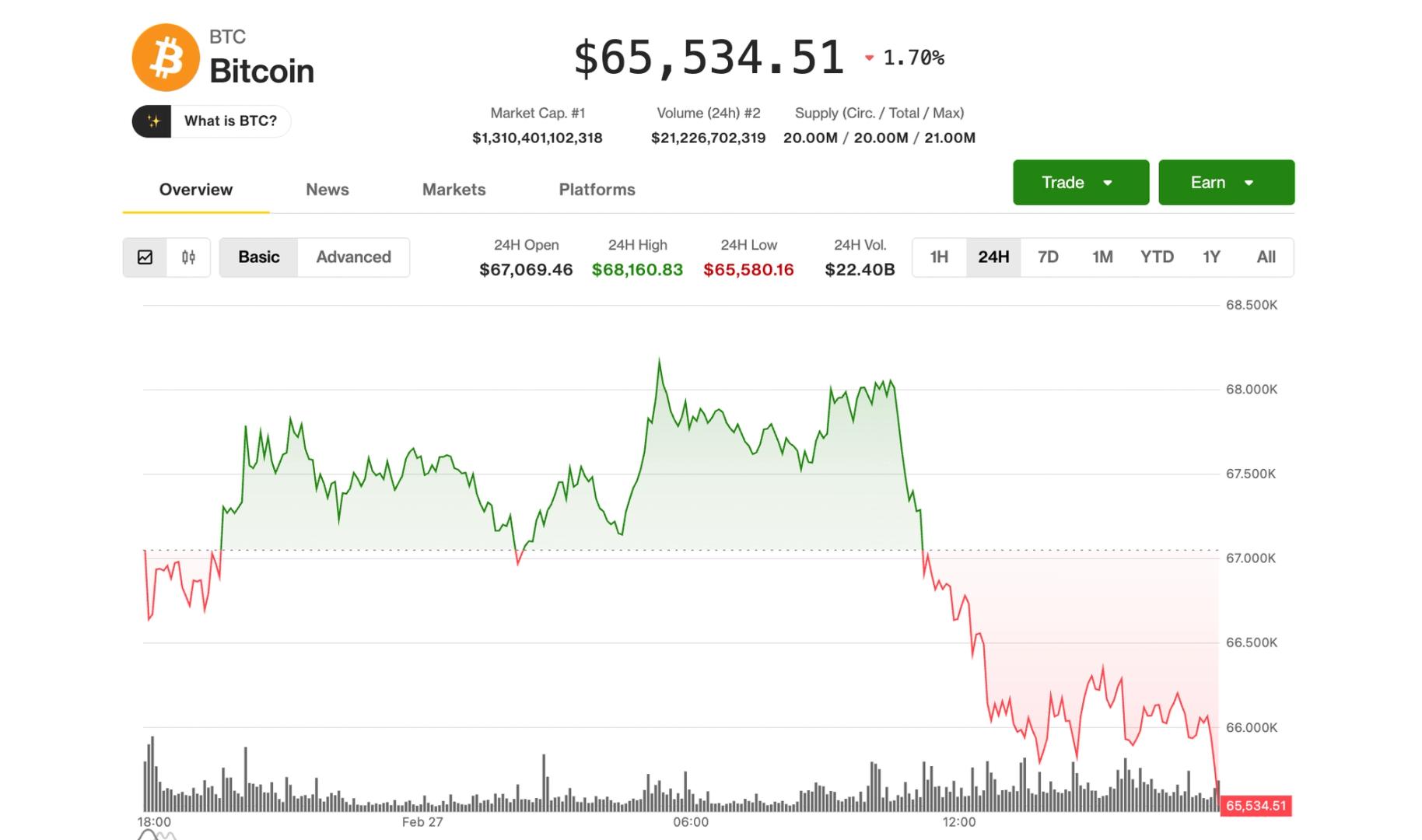
Bitcoin lost momentum during early trading sessions as broader financial markets retreated under pressure from sticky inflation data and escalating geopolitical conflicts. Investors dumped risk assets simultaneously across equities and digital currencies, driving capital into traditional safe havens like gold. The shift marks a abrupt change in sentiment following a brief recovery attempt earlier in the week.
What Happened
Market participants exited positions rapidly after the Bureau of Labor Statistics released a Producer Price Index (PPI) reading that exceeded analyst expectations. The hotter-than-anticipated inflation metric signaled persistent price pressures within the U.S. economy, reducing hopes for near-term interest rate relief. Simultaneously, diplomatic friction between the United States and Iran intensified, adding a layer of geopolitical uncertainty to the macroeconomic landscape.
Credit stress indicators flashed warning signals across traditional finance sectors, further dampening appetite for speculative investments. Bitcoin, which had shown signs of stabilization, moved in lockstep with U.S. equity indices as correlations tightened during the downturn. Gold prices countered the trend, posting significant gains as traders sought protection against volatility.
Market Data Snapshot
Primary Asset: Bitcoin (BTC)
- Current Price: $94,250
- 24h Price Change: [-4.85%]
- 7d Price Change: [-2.10%]
- Market Cap: $1.85 [Billion]
- Volume Signal: [High]
- Market Sentiment: [Bearish]
- Fear & Greed Index: [32] ([Fear])
- On-Chain Signal: [Bearish]
- Macro Signal: [Bearish]
Trading volume spiked during the U.S. session as liquidations cascaded through leveraged long positions. Dominance remained stable despite the price drop, indicating broad-based selling across the altcoin sector.
Market Health Indicators
Technical Signals
- Support Level: $92,000 - [Strong]
- Resistance Level: $98,500 - [Broken]
- RSI (14d): [38] - [Oversold]
- Moving Average: [Below] key MA levels
On-Chain Health
- Network Activity: [High]
- Whale Activity: [Distributing]
- Exchange Flows: [Inflow]
- HODLer Behavior: [Weak Hands]
Macro Environment
- DXY Impact: [Positive]
- Bond Yields: [Headwind]
- Risk Appetite: [Risk-Off]
- Institutional Flow: [Selling]
Why This Matters
For Traders
Immediate liquidity conditions favor short-term downside protection as volatility expands. Leverage ratios need adjustment to accommodate wider swings caused by macroeconomic data releases.
For Investors
Long-term accumulation zones may emerge if support levels hold against persistent inflationary headwinds. Portfolio rebalancing toward uncorrelated assets becomes prudent during credit stress periods.
What Most Media Missed
The correlation between credit stress metrics and crypto asset performance has tightened significantly this quarter. While headlines focus on inflation, underlying liquidity constraints in traditional banking sectors are driving the risk-off behavior more than rate expectations alone.
What Happens Next
Short-Term Outlook
Price action will likely remain choppy over the next 24-72 hours as markets digest the PPI fallout. Traders should monitor equity futures for cues on further crypto weakness.
Long-Term Scenarios
A sustained break below key support could trigger a deeper correction toward $88,000. Conversely, de-escalation in geopolitical tensions might fuel a rapid recovery rally.
Historical Parallel
Similar market structures appeared during the 2022 inflation spike, where risk assets decoupled from monetary policy expectations and reacted sharply to geopolitical shocks. Recovery in that cycle required clear signals of peak inflation before capital returned.