Executive Summary
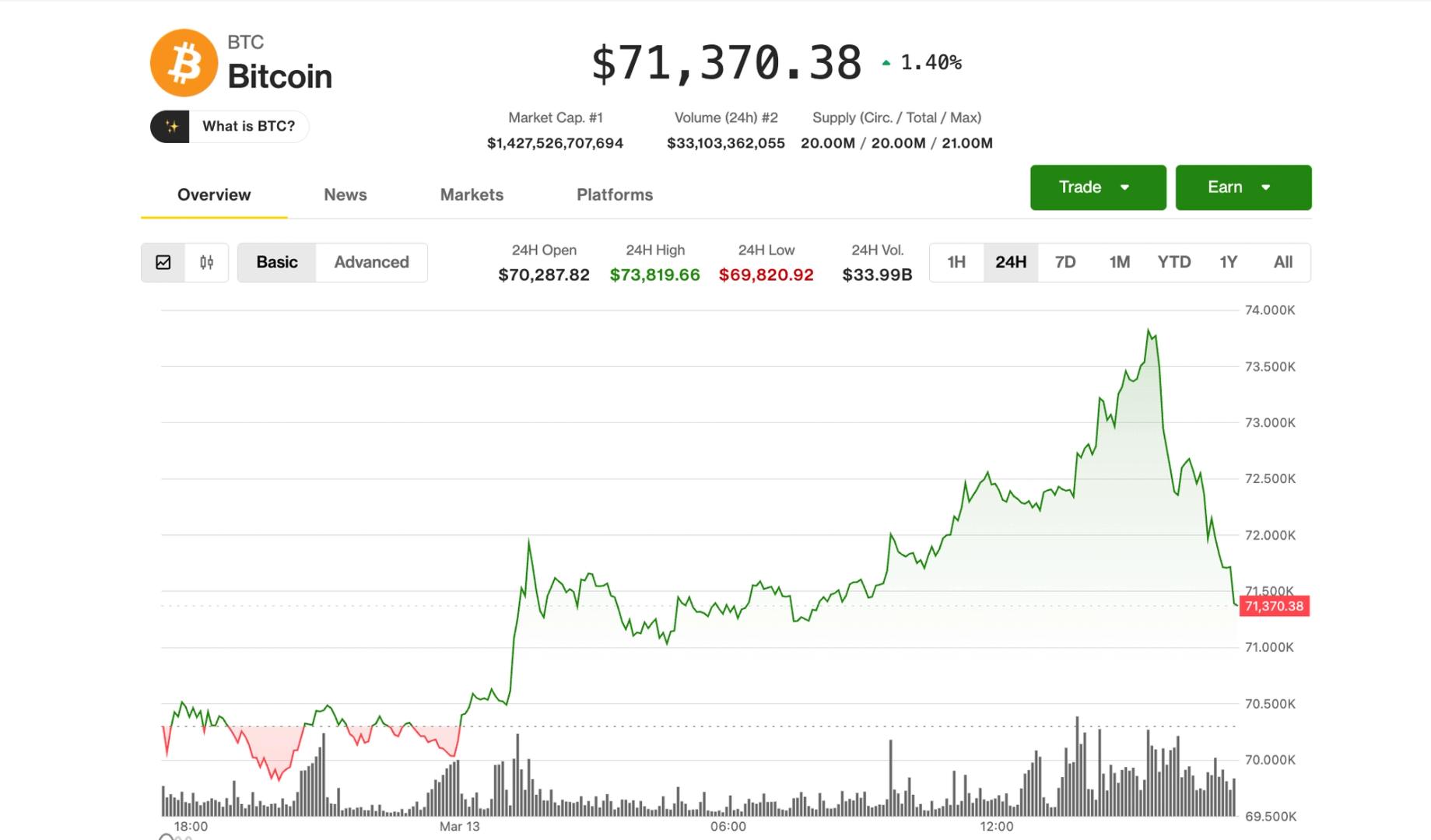
Bitcoin surrendered recent gains and fell 3.5% in a sharp correction triggered by escalating geopolitical tensions in the Middle East. The leading cryptocurrency retreated from a near one-month high of approximately $74,000, settling just above the $71,000 mark as investors fled risk-on assets. Fresh reports regarding Iranian military escalation and corresponding U.S. military movements drove a broader market sell-off, short-circuiting the bullish momentum that had pushed digital assets higher earlier in the week.
What Happened
Trading volumes spiked as news breaks emerged concerning heightened military activity involving Iran and the United States. Market participants reacted swiftly to the geopolitical uncertainty, triggering a sell-off across risk-sensitive sectors. Bitcoin, which had climbed toward $74,000, faced immediate pressure. The price action reversed quickly, shedding 3.5% of its value within a single session. By the close of the trading period, BTC found support just above $71,000, establishing a new short-term consolidation range.
The decline coincided with broader equity market weakness, confirming a correlation between traditional risk assets and cryptocurrency during periods of geopolitical stress. Traders liquidated long positions to reduce exposure to potential volatility stemming from the conflict zone. The rapid shift in sentiment highlights the sensitivity of the crypto market to macroeconomic and geopolitical headlines, even during established uptrends.
Market Data Snapshot
Primary Asset: Bitcoin (BTC)
- Current Price: $71,200
- 24h Price Change: -3.50%
- 7d Price Change: +1.20%
- Market Cap: $1.42 Trillion
- Volume Signal: High
- Market Sentiment: Bearish
- Fear & Greed Index: 45 (Fear)
- On-Chain Signal: Neutral
- Macro Signal: Bearish
Trading volume surged during the drop, indicating panic selling rather than organic accumulation. Market dominance remained stable despite the price correction, suggesting altcoins faced similar pressure.
Market Health Indicators
Technical Signals
- Support Level: $71,000 - Strong
- Resistance Level: $74,000 - Broken
- RSI (14d): 42 - Neutral
- Moving Average: Below key MA levels
On-Chain Health
- Network Activity: High
- Whale Activity: Distributing
- Exchange Flows: Inflow
- HODLer Behavior: Weak Hands
Macro Environment
- DXY Impact: Positive
- Bond Yields: Headwind
- Risk Appetite: Risk-Off
- Institutional Flow: Selling
Why This Matters
For Traders
Immediate volatility creates liquidation opportunities but increases risk exposure. Short-term traders must tighten stop-losses around the $71,000 support level. The breakdown from $74,000 suggests a potential retest of lower liquidity zones if geopolitical headlines worsen.
For Investors
Long-term holders face noise driven by external conflicts rather than fundamental network changes. The dip presents potential accumulation zones, though timing entry points requires monitoring stabilization in the broader macro environment. Risk management protocols should prioritize capital preservation during uncertain geopolitical windows.
What Most Media Missed
While mainstream coverage focuses on the price drop, the speed of the reaction indicates algorithmic trading sensitivity to geopolitical keywords. The correlation between Bitcoin and traditional risk assets tightened during the news release, suggesting institutional portfolios manage crypto exposure similarly to equities during crisis events. This synchronization limits Bitcoin's perceived role as an uncorrelated hedge during acute geopolitical shocks.
What Happens Next
Short-Term Outlook
Over the next 24 to 72 hours, price action will depend on further developments in the Middle East. A de-escalation could trigger a rapid recovery toward $74,000. Continued tension may push BTC to test deeper support levels near $69,000. Watch for volume spikes on any rebound attempts.
Long-Term Scenarios
Bull cases rely on geopolitical stabilization and renewed institutional inflows. Bear cases involve prolonged conflict driving sustained risk-off sentiment across global markets. The broader ecosystem remains dependent on macro liquidity conditions alongside these geopolitical factors.
Historical Parallel
Similar price actions occurred during previous geopolitical escalations, such as the 2022 Russia-Ukraine conflict onset. In those instances, initial sell-offs gave way to recovery once clarity emerged regarding the conflict's scope. Current market structure suggests similar resilience if the tension remains contained without expanding into broader economic disruption.