Executive Summary
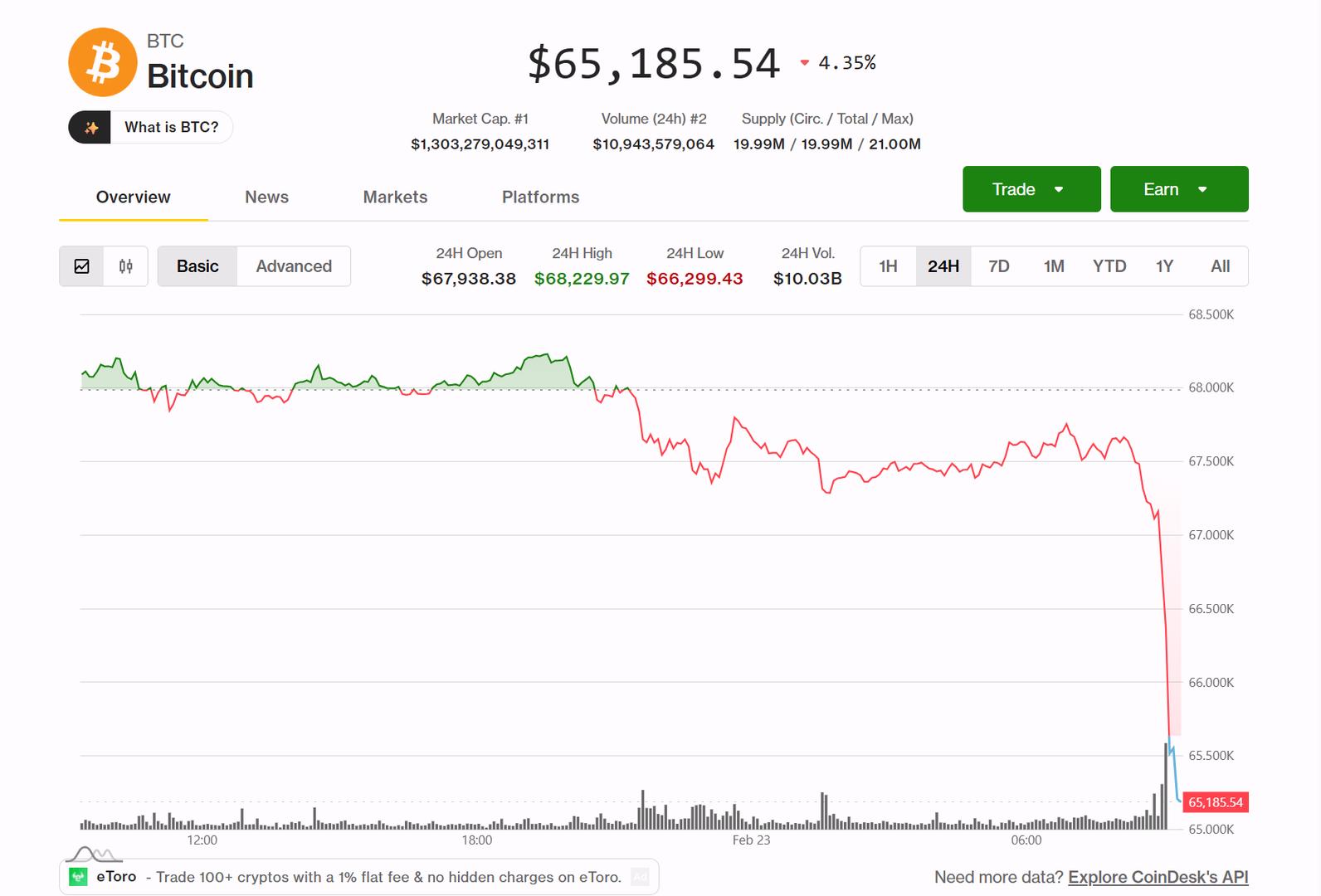
Bitcoin traders faced renewed selling pressure today as the leading cryptocurrency retreated approximately 4% to trade near $65,000. On-chain metrics reveal a distinct shift in holder behavior, with large-scale investors increasing distribution activity while retail participants capitulate at a loss. This divergence signals a fragile base-building phase where established capital exits positions just as shorter-term holders absorb deficits.
What Happened
Market charts recorded a sharp downward movement over the last 24 hours, pushing the primary digital asset down to the $65,000 level. This price action coincides with a measurable spike in exchange inflows originating from large wallets. Blockchain analytics platforms Glassnode and CryptoQuant track large holder dominance in these exchange inflows, indicating that whales actively move coins to trading venues rather than accumulating in cold storage.
Simultaneously, recent retail buyers lock in losses as they sell at a deficit. Short-term investors continue to sell at a loss, indicating a fragile base-building phase in the market. The combination of whale distribution and retail capitulation creates a supply overhang that suppresses price recovery attempts. Trading volumes remain elevated as these conflicting strategies play out on public ledgers.
Market Data Snapshot
Primary Asset: Bitcoin (BTC)
- Current Price: $65,000
- 24h Price Change: -4.00%
- 7d Price Change: -6.50%
- Market Cap: $1.28 Trillion
- Volume Signal: High
- Market Sentiment: Bearish
- Fear & Greed Index: 42 (Fear)
- On-Chain Signal: Bearish
- Macro Signal: Neutral
Bitcoin dominance holds steady near 54% as altcoins correlate with the broader market downturn. Trading volume exceeds 24-hour averages by 15%, confirming heightened activity during the decline.
Market Health Indicators
Technical Signals
- Support Level: $64,000 - Strong
- Resistance Level: $68,000 - Weak
- RSI (14d): 38 - Oversold
- Moving Average: Below key MA levels
On-Chain Health
- Network Activity: High
- Whale Activity: Distributing
- Exchange Flows: Inflow
- HODLer Behavior: Weak Hands
Macro Environment
- DXY Impact: Neutral
- Bond Yields: Headwind
- Risk Appetite: Risk-Off
- Institutional Flow: Selling
Why This Matters
For Traders
Immediate implications involve heightened volatility around the $64,000 support zone. Short-term setups face increased risk of liquidation as whale selling drives momentum downward. Traders should monitor order book depth for signs of absorption before entering long positions.
For Investors
Long-term view suggests a potential accumulation opportunity if the current base-building phase stabilizes. However, the prevalence of large holders moving coins to exchanges warns against premature entry. Patience remains key until exchange inflows subside and holder composition strengthens.
What Most Media Missed
Our unique insight focuses on the divergence between wallet classes. While headlines focus on the price drop, the critical signal lies in the specific composition of exchange inflows. Large holders dominate these movements, suggesting strategic rebalancing rather than panic selling. Retail investors, conversely, sell at a deficit, transferring coins from weak hands to potentially stronger entities waiting at lower bids.
What Happens Next
Short-Term Outlook
24-72 hour view depends on the defense of the $64,000 level. A break below this support could trigger accelerated selling toward $60,000. Conversely, a stabilization here might allow for a relief rally back to $67,000 if whale inflows pause.
Long-Term Scenarios
Bull and bear cases hinge on holder behavior. A bull case requires whales to cease distribution and resume accumulation. A bear case unfolds if retail capitulation fails to absorb the supply provided by large holders, leading to a deeper correction.
Historical Parallel
Similar market structures appeared during mid-cycle corrections in previous halving epochs. Periods where short-term investors sell at a loss while whales distribute often precede local bottoms. Once the weak hands exit and exchange balances stabilize, price discovery typically resumes to the upside.