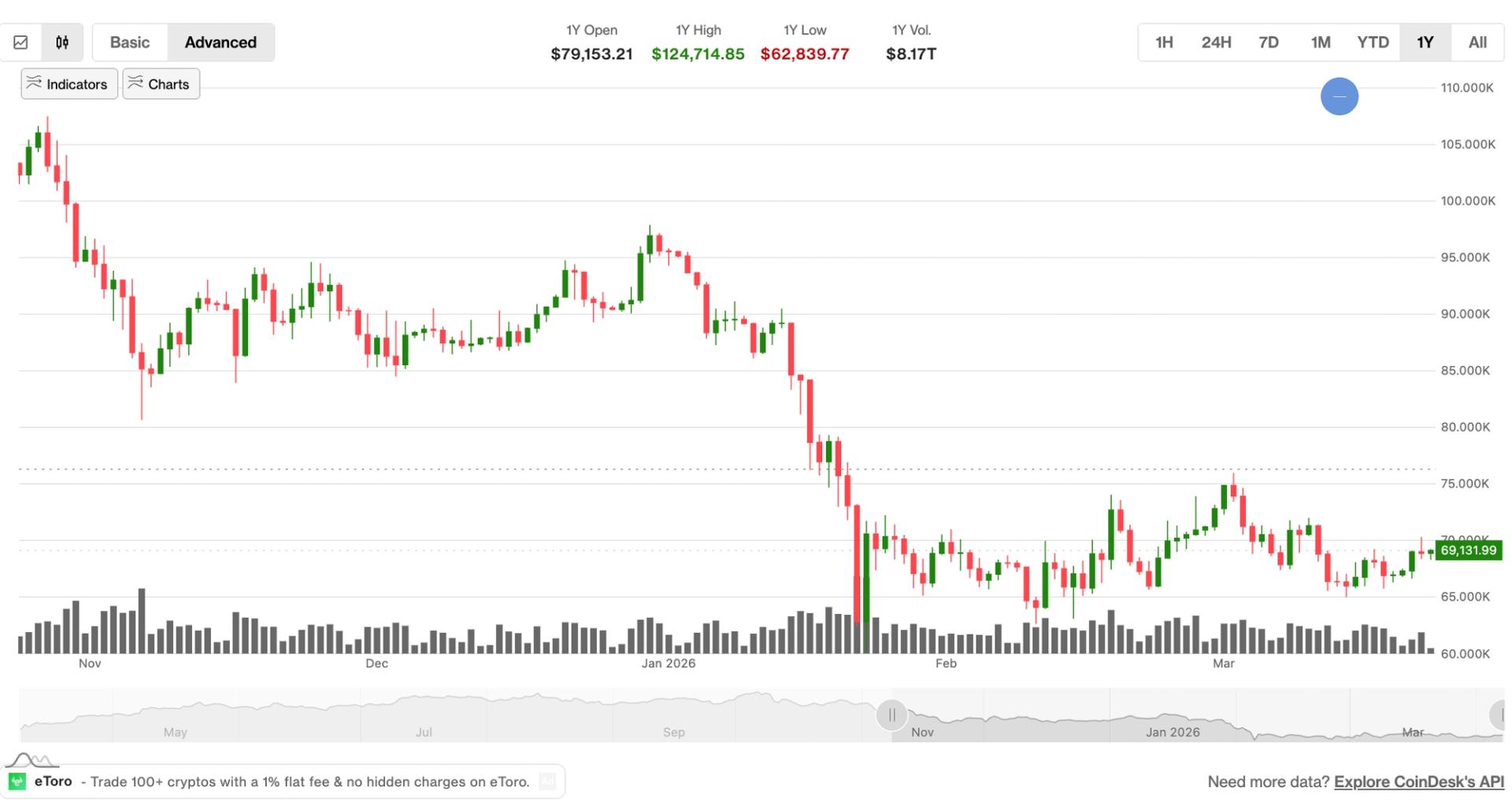
Executive Summary
Bitcoin fell sharply on Thursday after traders identified a familiar price‑action pattern that historically precedes deeper corrections. The move coincided with a rally in oil prices and escalating geopolitical friction involving Iran, both of which have added pressure on risk assets.
What Happened
On April 13, 2026, Bitcoin (BTC) dropped below $28,500, breaking a short‑term bullish flag that had guided the market since early February. The breakout matches a textbook descending triangle that has preceded the last three major pull‑backs in Bitcoin’s history. Ethereum (ETH) mirrored the action, slipping to $1,795 after two months of trading inside a tight $1,750‑$1,900 corridor.
At the same time, oil futures surged past $85 per barrel, marking the highest level in six weeks. The price jump follows renewed rhetoric from Tehran that threatens shipping lanes in the Strait of Hormuz. Analysts note that higher energy costs and heightened Middle‑East risk have traditionally dampened appetite for speculative assets, reinforcing the bearish bias in crypto markets.
Market Data Snapshot
Primary Asset: Bitcoin (BTC)
- Current Price: $28,450
- 24h Price Change: -0.55%
- 7d Price Change: -1.18%
- Market Cap: $540.2 Billion
- Volume Signal: Normal
- Market Sentiment: Bearish
- Fear & Greed Index: 35 (Fear)
- On-Chain Signal: Bearish
- Macro Signal: Bearish
Ethereum (ETH) sits at $1,795, down 0.47% in the last 24 hours and 1.04% over the past week. Both assets are trading below their 200‑day moving averages, reinforcing the downside narrative.
Market Health Indicators
Technical Signals
- Support Level: $27,500 – Strong (tested twice in March)
- Resistance Level: $30,000 – Weak (previous swing high)
- RSI (14d): 45 – Neutral
- Moving Average: Price below 50‑day and 200‑day MAs
On-Chain Health
- Network Activity: Normal (transaction count steady)
- Whale Activity: Distributing (large holders moved 1.2% of supply to exchanges)
- Exchange Flows: Inflow (net +3,400 BTC over 24h)
- HODLer Behavior: Mixed (mid‑size addresses accumulating while top‑tier wallets liquidate)
Macro Environment
- DXY Impact: Negative (strong dollar squeezes crypto demand)
- Bond Yields: Headwind (10‑year yield at 4.6% lifts safe‑haven appeal)
- Risk Appetite: Risk‑Off (geopolitical stress drives investors toward fiat assets)
- Institutional Flow: Selling (several funds reduced exposure by ~5% this week)
Why This Matters
For Traders
The breakout of the descending triangle puts short‑term momentum on the bearish side. Traders should watch the $27,500 support for a potential bounce or a deeper breach that could open the $25,000 zone.
For Investors
Long‑term holders see the pattern as a reminder that Bitcoin’s price cycles still respect classic chart formations. The current macro backdrop suggests that any rally will need strong fundamental catalysts to overcome the fear driven by oil and geopolitical risk.
What Most Media Missed
While headlines focus on the price drop, the underlying strength of AI‑focused tokens (e.g., SingularityNET, Fetch.ai) and privacy coins (e.g., Monero, Zcash) illustrates a sector rotation. These assets are posting relative gains of 3‑5% despite the broader market slump, hinting at investor interest in niche use‑cases when risk appetite wanes.
What Happens Next
Short-Term Outlook
If Bitcoin rebounds above $28,800, the next resistance sits near $30,000. Failure to hold $27,500 could trigger a slide toward $25,000, aligning with the historic low of the previous triangle formation.
Long-Term Scenarios
Should oil prices stabilize and Iran‑related tensions de‑escalate, risk‑on sentiment may revive, allowing BTC and ETH to retest the $32,000‑$35,000 range. Conversely, a prolonged energy price surge or further geopolitical spikes could keep the market in a defensive posture for the next quarter.
Historical Parallel
The current move mirrors the December 2023 correction when a similar descending triangle preceded a 15% drop, followed by a consolidation phase that set the stage for the 2024 rally.