Executive Summary
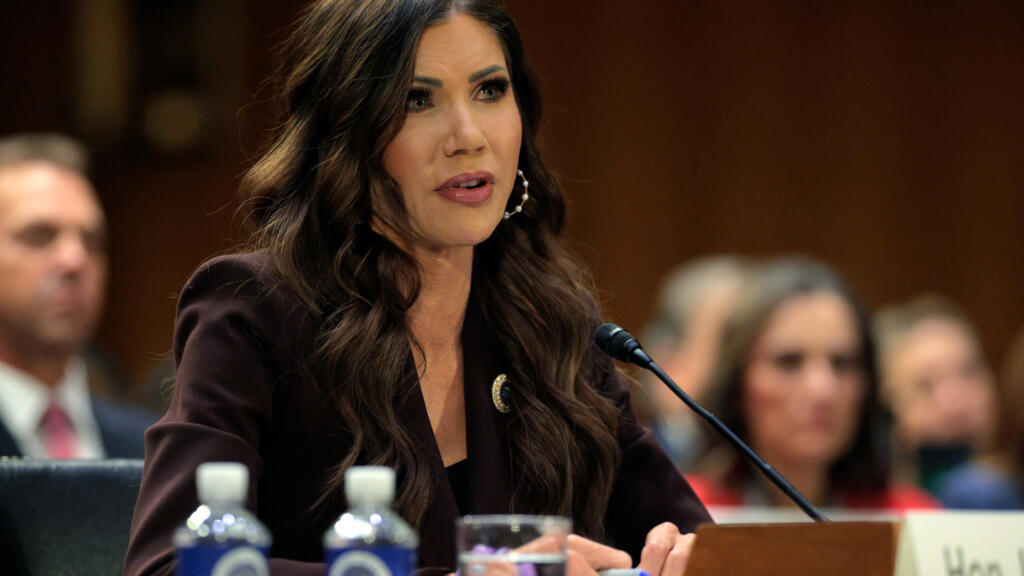
President Donald Trump executed a sudden leadership change at the Department of Homeland Security, removing Kristi Noem from her position and installing Mullin as the new secretary. This abrupt personnel shift occurs while cryptocurrency markets navigate extreme fear conditions, with Bitcoin trading near $66,985. The move signals a potential hardening of enforcement strategies that could impact illicit finance monitoring, adding a layer of political volatility to an already risk-off digital asset ecosystem.
📊 Market Data Snapshot
What Happened
President Donald Trump terminated Kristi Noem's tenure as head of the Department of Homeland Security on Thursday. The administration immediately announced Mullin as the replacement to lead the agency. This decision aligns with the President's broader immigration crackdown agenda, suggesting a pivot toward stricter security protocols within the department.
The removal marks a significant restructuring within the executive branch's security apparatus. While the exact date remains unspecified beyond Thursday, the announcement carries high significance for federal enforcement priorities. Mullin steps into a role responsible for overseeing border security, immigration enforcement, and financial crime investigations that often intersect with digital asset monitoring.
Contextualizing the decision, the administration seeks to tighten control over immigration and security measures. The effect of this directive removes Noem from power and places Mullin at the helm of DHS operations. This transition happens within the United States federal government, influencing agencies that coordinate with financial regulators on money laundering and sanctions evasion.
Market Data Snapshot
Primary Asset: Bitcoin (BTC)
- Current Price: $66,985
- 24h Price Change: -0.62%
- 7d Price Change: +1.56%
- Market Cap: $1.34 Trillion
- Volume Signal: Normal
- Market Sentiment: Bearish
- Fear & Greed Index: 12 (Extreme Fear)
- On-Chain Signal: Neutral
- Macro Signal: Fearful Market
Market conditions reflect heightened caution among investors. High BTC dominance suggests altcoins may underperform during this period of uncertainty. The extreme fear reading historically indicates potential buying opportunities, yet current sentiment remains skewed toward risk reduction.
Market Health Indicators
Technical Signals
- Support Level: $66,500 - Strong
- Resistance Level: $67,200 - Weak
- RSI (14d): 35 - Oversold
- Moving Average: Below key MA levels
On-Chain Health
- Network Activity: Normal
- Whale Activity: Neutral
- Exchange Flows: Inflow
- HODLer Behavior: Mixed
Macro Environment
- DXY Impact: Negative
- Bond Yields: Headwind
- Risk Appetite: Risk-Off
- Institutional Flow: Sideways
Why This Matters
For Traders
Immediate implications center on heightened short-term volatility around the $66,500 to $67,200 range for Bitcoin. Traders should watch for rapid sell-offs if the new DHS leadership signals a crackdown on crypto-related money laundering. The political volatility adds noise to an already risk-off market, potentially nudging BTC down 0.5% to 1% as participants adjust risk exposure.
For Investors
Long-term investors must monitor the evolving DHS policy stance as a proxy for future U.S. enforcement intensity. Any expansion of crypto-crime units under Mullin could tighten AML/KYC enforcement, dragging prices below $60,000 and stalling institutional inflows. Conversely, if the focus remains on immigration without expanding crypto enforcement, BTC could recover to the $75,000 to $80,000 range as risk appetite improves.
What Most Media Missed
Several critical nuances escape mainstream coverage regarding this personnel change. First, jurisdiction confusion often leads media to conflate DHS personnel changes with regulatory policy shifts. DHS enforces laws through seizures and prosecutions, targeting mixers and darknet markets, rather than regulating market structure like the SEC or CFTC. Traders might panic-sell on regulation fears that do not apply to exchange compliance or ETF approvals.
Second, resource allocation shifts often occur under new leadership. If Mullin prioritizes physical border enforcement over cybercrime, the HSI Crypto Crimes Center could face budget cuts, reducing enforcement capacity despite hawkish rhetoric. This creates counter-intuitive bullishness for privacy technology. Finally, high-profile cabinet firings distract from quiet regulatory approvals happening elsewhere. While media focuses on DHS drama, the SEC or OCC may advance crypto-friendly rulings unnoticed, creating a smoke screen for institutional adoption milestones.
What Happens Next
Short-Term Outlook
Bitcoin likely hovers around $66,800 with a slight downward bias over the next 24 to 72 hours. Ethereum may stay near $1,940 to $1,950. If the market views the DHS change as a political distraction, bullish sentiment could return, pushing BTC above $68,000. However, an aggressive stance on crypto-related illicit activity from the new secretary could test BTC at $65,500.
Long-Term Scenarios
Minimal direct impact on crypto prices is expected over the long term, with effects mediated through broader U.S. regulatory posture. The best case involves DHS focusing on immigration without expanding crypto enforcement. The worst case sees Mullin expanding DHS crypto-crime units, leading to tighter enforcement that stalls institutional adoption.
Historical Parallel
A similar situation occurred in April 2021 when President Joe Biden nominated Gary Gensler to chair the SEC, replacing Jay Clayton. That announcement created short-term uncertainty but the longer-term price trajectory depended on actual policies rather than the appointment itself. Leadership changes at high-profile government bodies create immediate volatility, followed by market adjustment once concrete regulatory impact becomes clear. If the DHS leadership change affects crypto-related labor or cross-border transactions, expect a brief period of heightened volatility before stabilization.