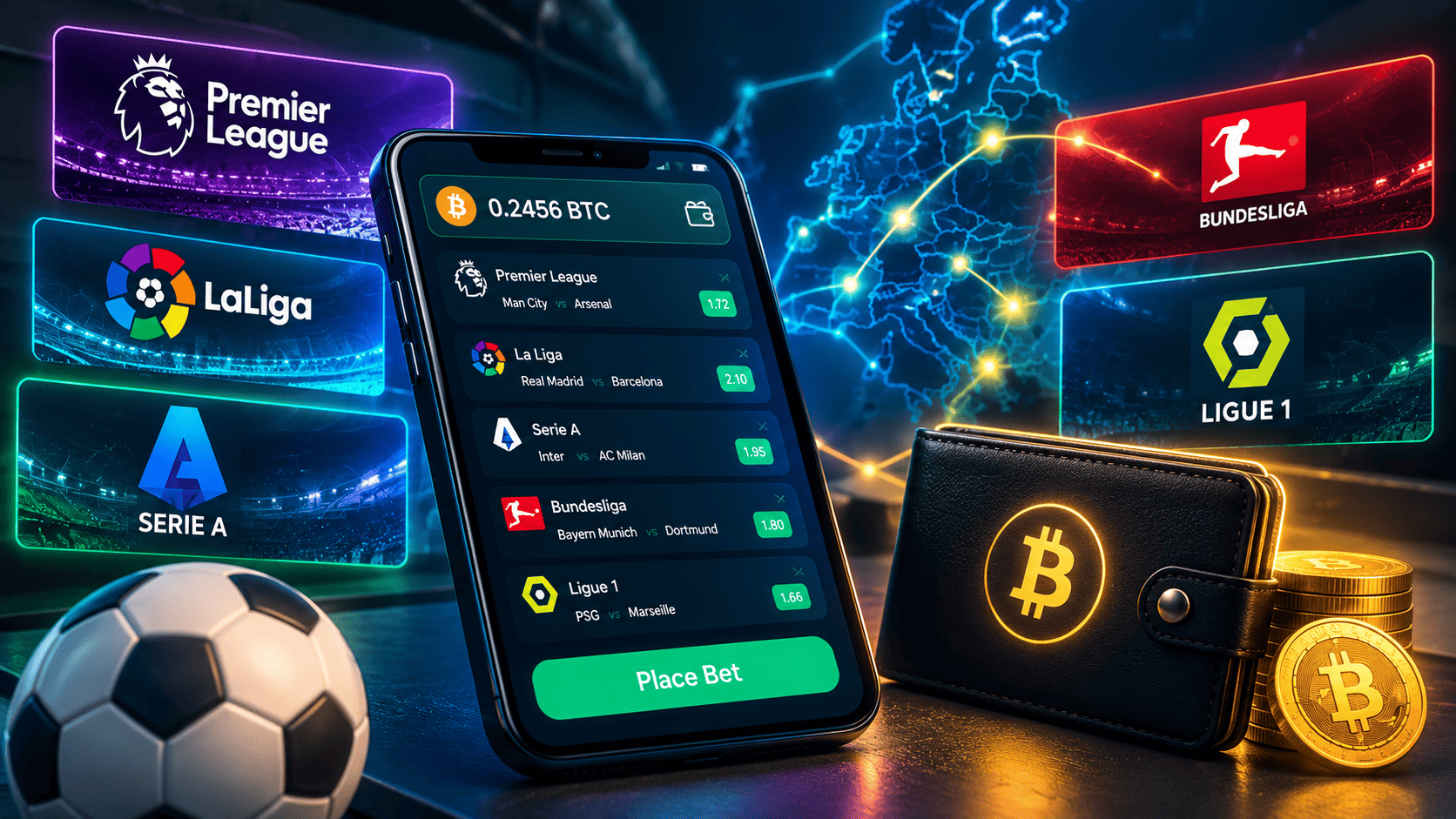
Cryptocurrency has quietly become one of the fastest-growing payment methods in online football betting. Bettors are funding accounts with Bitcoin, USDT, Ethereum, and a range of other tokens instead of reaching for a bank card. Platforms like Dexsport now support more than 40 cryptocurrencies across 20 blockchain networks and allow sign-ups through email, Telegram, or direct wallet connections — no mandatory identity verification needed.
Why crypto is replacing plastic
Crypto deposits arrive within minutes after blockchain confirmation, far faster than traditional banking. Withdrawals work the same way: funds go straight to the player's wallet as a direct blockchain transaction, no intermediary bank in the way. That speed and removal of middlemen is a big draw for a global audience. Football betting involves users from dozens of countries, and crypto bypasses local banking restrictions entirely.
Wallet-based logins — through MetaMask, Trust Wallet, WalletConnect, and even Telegram — mean users never hand over their private keys to the platform. The trade-off is that players are responsible for their own wallet security. A common beginner mistake is sending funds on the wrong blockchain network.
What bettors are actually betting on
The world's most popular sport generates billions in bets each year. Major football leagues covered include the Premier League, UEFA Champions League, La Liga, Bundesliga, Serie A, Ligue 1, and FIFA World Cup qualifiers. Popular markets run the standard gamut: match winner, double chance, both teams to score, over/under goals, Asian handicaps, correct score, first goalscorer, and live betting. The betting process itself hasn't changed much — create an account, fund it, pick a market, withdraw winnings — but the payment rails have.
Stablecoins and the volatility question
Bitcoin is widely accepted and liquid, but its price swings can complicate bankroll management. That's where stablecoins like USDT come in. Dollar-pegged and broadly supported, USDT lets bettors keep their bankroll stable without cashing out to fiat. Some players still prefer Bitcoin for its liquidity and decentralization, but USDT's predictability is tough to beat for anyone who just wants to bet on a match without worrying about the price of their deposit tanking overnight.
No-KYC and the privacy appeal
Dexsport is one platform that lets users register without mandatory identity verification — a no-KYC model. Sign-up options include email, Telegram, MetaMask, Trust Wallet, and other wallet solutions. For bettors in jurisdictions where online gambling faces tight regulation or where banking is restricted, that level of privacy matters. Of course, users are still bound by local laws, but the tech removes a gatekeeper.
With FIFA World Cup qualifiers on the calendar and more platforms integrating wallet connections, the shift from bank cards to crypto in football betting shows no signs of slowing. The question now is whether regulators will take a closer look at the no-KYC end of the market — or whether the industry keeps growing in the cracks between traditional finance and blockchain.