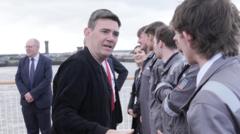
A BBC World Service documentary has aired the account of a man who describes himself as a Russian saboteur operating on behalf of Ukraine. In the film, he says he gathered and shared reconnaissance videos and claims he played a part in drone attacks carried out on his home soil. The program is a piece of journalism, not a court filing; the claims are his, and the BBC presents them as such.
The story lands in a conflict that has already pulled crypto into its orbit on both sides — sanctions workarounds, donation drives, cross-border settlement. It has no direct line to bitcoin's tape this week, and traders treated it that way.
The videos and the claim
The documentary's central evidence is the material the man says he supplied: reconnaissance footage, passed on to people he describes as his Ukrainian handlers. From there, he says, the intelligence fed into drone operations against targets inside Russia. The film does not, on the facts available, document a payment trail or name a financing channel for the alleged operation.
📊 Market Data Snapshot
That gap is the one worth flagging. Ukraine's drone effort has been partly crowdfunded over the years, and if a saboteur network were being compensated, there could in principle be an on-chain record. Nobody has produced one. The documentary is a human source telling his story, which is a different evidentiary standard from a blockchain trail.
Why the BBC ran it now
State broadcasters don't typically air a self-identified saboteur by accident. The timing reads as messaging — a signal to Russian elites that internal sabotage is real, and a setup that could precede a new round of sanctions or escalation. That's the part with any crypto relevance at all. Sanctions rounds, not documentaries, are what push trade rails toward stablecoins and OTC channels in affected economies.
If a new package follows, watch for ruble-adjacent flows and stablecoin spreads in Eastern European pairs. That's where the measurable effect would show up, weeks after the broadcast, not on the day of it.
The market shrugged
Bitcoin is up modestly over the last 24 hours while total market cap has slipped, and dominance remains elevated. Read that as capital hiding inside crypto rather than leaving it — BTC behaving like the reserve asset of the asset class during a risk-off stretch. Geopolitical noise of this kind isn't being priced. The Fear & Greed reading sits in greed territory, which tells you traders are watching liquidity and rate expectations, not drone footage.
The honest assessment: this headline is noise for anyone with a position on. It matters only if it escalates into something with a transmission mechanism — sanctions, a NATO response, a broader risk-off move that drags crypto down with equities before a safe-haven bid shows up.
The compliance angle
The more durable question is institutional. A documentary alleging kinetic use of covert networks will get compliance desks stress-testing exposure to anything with a tangential Russia-Ukraine link, and that can drain liquidity from smaller tokens before any regulator acts. Exchanges and custodians don't need a rule to de-risk; they need a headline and a nervous risk committee.
The concrete next thing to watch is whether the broadcast is followed by a formal sanctions package or an official response from Moscow. That, not the film itself, is the event with a crypto transmission channel. Until then, the story sits where it started: one man's account, aired by the BBC, with the on-chain question still unanswered.