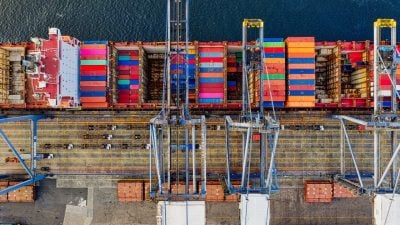
A ship has sunk in the Black Sea after a drone attack, leaving crew members missing. No one has claimed responsibility for the strike, which comes as Russia intensifies its military activity in the region as part of its war against Ukraine. The incident adds fresh uncertainty to a corridor that matters for grain and energy shipments—and, by extension, for the inflation and risk sentiment that crypto traders watch closely.
What we know, and what we don't
The facts are thin. A vessel went down. People are unaccounted for. The Kremlin hasn't commented directly on this specific sinking, and Ukrainian officials haven't either. That ambiguity is the story right now: in a war where both sides have used drones extensively, the absence of a clear claim leaves room for competing narratives. It also makes it harder for markets to price the event. Traders don't like fog, and this is fog.
📊 Market Data Snapshot
What's clear is the location. The Black Sea has been a flashpoint since Russia pulled out of the grain deal and stepped up strikes on port infrastructure. Every new attack there carries a tail risk: disruption to shipping lanes that move wheat, corn, and, to a lesser extent, energy products. That's the channel through which a seemingly distant naval incident can reach global markets.
The crypto angle is second-order, not obvious
Bitcoin isn't a grain contract. It won't reprice because a ship sank. But the broader macro backdrop—geopolitical tension, potential commodity shocks, inflation hedging—is the environment in which bitcoin's "digital safe haven" narrative gets tested. This week, that test is muted. Price action is calm: BTC is up 0.19% over 24 hours, with low volume and a Fear & Greed reading of 73 (Greed). A greedy market doesn't panic on headlines. It takes profits.
That's the nuance most coverage will miss. A geopolitical shock during complacency often produces a 'sell the news' move rather than a knee-jerk rally. If escalation comes, the correction could be sharper because positioning is crowded. For now, though, bitcoin is holding above $86,000 and the market is treating the Black Sea as background noise.
The hidden cost for crypto businesses with physical exposure
There's a less obvious second-order effect: crypto exchanges and custodians with physical infrastructure in or near conflict zones now face a higher security bill. Insurance premiums rise. Data centers get relocated. Staff safety becomes a line item. That disproportionately hits smaller players, who can't absorb the costs as easily as the big exchanges. Over time, it strengthens the case for decentralized custody and geographically distributed operations—models that don't depend on a single jurisdiction or a single physical site.
This isn't a today story. It's a slow squeeze. But it's the kind of thing that reshapes competitive dynamics over quarters, not days.
What to watch next
The immediate question is escalation. If Russia uses this attack as a pretext to widen its blockade of Ukrainian ports, or if a third party is found to be involved, the risk-off move would hit all assets, crypto included. Bitcoin might dip with equities before recovering on safe-haven demand—but the timing and depth depend entirely on the next 48 hours of geopolitical news.
For now, the market is shrugging. That could change if shipping insurance rates spike or if a major commodity contract gaps higher at the next open. Until then, the Black Sea remains a background risk, not a driver. The crew are still missing, and no one has said who fired the drone. Those two facts are the ones that matter most—and the ones least likely to be resolved soon.