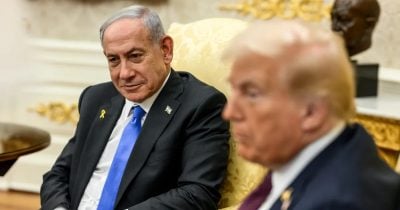
Tucker Carlson, the former Fox News host, has alleged that Israeli Prime Minister Benjamin Netanyahu pushed former President Donald Trump to launch military action against Iran. The claim, made without cited evidence, is already stirring debate over Netanyahu's influence on U.S. foreign policy at a time when Washington's stance on Tehran is shifting.
What Carlson said
During a recent episode of his online show, Carlson stated that Netanyahu personally pressured Trump to strike Iran. He offered no supporting documentation or named sources. The assertion comes months after Trump publicly denied that Netanyahu had ever urged him to go to war with Iran, though Trump himself has oscillated on the issue.
Carlson's relationship with Trump has been complex — he once advised the president informally — but his current platform gives the claim a wide audience. Whether it has any factual basis remains unclear.
The allegation lands amid heightened geopolitical instability. Iran is enriching uranium closer than ever to weapons-grade levels, and U.S. intelligence assessments warn that the window for diplomacy is narrowing. Meanwhile, Israeli leaders have long argued that a nuclear Iran is an existential threat, and Netanyahu has repeatedly pushed for tougher U.S. action.
But American public opinion is evolving. Polls show growing wariness of another Middle East conflict, and many voters — including Republicans — are skeptical of deeper military involvement. If Carlson's claim gains traction, it could sharpen that skepticism and put Netanyahu in the crosshairs of U.S. domestic politics.
Scrutiny on Netanyahu's leadership
The Israeli prime minister is already under pressure at home. His coalition government is battling corruption allegations, judicial overhaul protests, and security concerns on multiple fronts. A foreign policy controversy involving the U.S. would only add to his troubles.
Critics have long accused Netanyahu of playing partisan politics in Washington, favoring Republicans while alienating Democrats. That dynamic has strained the bipartisan support Israel traditionally enjoys. Carlson's claim, even if unproven, feeds a narrative that Netanyahu's personal lobbying may have pushed U.S. policy toward confrontation.
No official response has come from Netanyahu's office or from Trump's team. Fact-checkers have not yet weighed in on Carlson's specific allegation. The U.S. and Israel continue to coordinate on Iran policy, but the trust that underlies that coordination could be tested if the claim draws sustained attention.
The question now is whether Carlson — or anyone else — produces evidence. Without it, the allegation remains a talking point. But in a polarized information environment, a talking point can become a political liability fast.