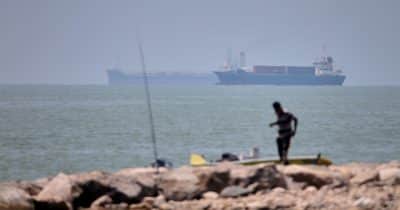
China has placed a floating platform on Scarborough Shoal in the South China Sea, a move that is raising alarm over a potential expansion of Beijing's control in the disputed waters. The deployment, confirmed by multiple sources, threatens to further strain already tense ties between China and the Philippines and inject new uncertainty into regional geopolitics.
What the platform means
The floating structure is the latest in a series of Chinese activities at the shoal, which is also claimed by the Philippines. While China has not publicly detailed the platform's purpose, observers note it could serve as a staging point for patrols, surveillance, or even future construction. The shoal sits near key shipping lanes and fishing grounds, making any permanent or semi-permanent installation a potential flashpoint.
Previous Chinese actions in the South China Sea, such as building artificial islands and stationing military assets, have drawn condemnation from neighboring countries and international bodies. The new platform could follow a similar pattern, gradually expanding Beijing's footprint in an area already marked by competing claims.
Strain on Manila-Beijing ties
Relations between China and the Philippines have seesawed in recent years, oscillating between cooperation and confrontation. The deployment at Scarborough Shoal risks tipping the balance toward conflict. The Philippine government has long opposed any unilateral moves by China in the area, and this latest step is likely to provoke a strong diplomatic response.
For Manila, the shoal is not just a territorial claim but a matter of national pride and economic security. Local fishermen rely on its waters, and any restriction on access could hurt livelihoods. The floating platform, even if initially presented as benign, could be the first step toward a more permanent presence that limits Philippine activity.
Broader geopolitical fallout
Beyond the bilateral dimension, the deployment has implications for the entire region. The United States, a treaty ally of the Philippines, has repeatedly warned against destabilizing actions in the South China Sea. Other claimant states—Vietnam, Malaysia, Brunei, and Taiwan—are watching closely. If China's move goes unchallenged, it could set a precedent for further expansion elsewhere.
International organizations may also weigh in. The United Nations Convention on the Law of the Sea (UNCLOS), which both China and the Philippines are signatories to, provides a legal framework for resolving disputes. But China has rejected a 2016 arbitration ruling that invalidated its claims in the area, raising questions about whether any diplomatic or legal pushback will matter.
The deployment comes at a time of heightened global attention on the Indo-Pacific region. Major powers are jostling for influence, and any escalation in the South China Sea could draw in outside actors, potentially leading to a broader standoff.
For now, the platform sits at Scarborough Shoal, and its next use—or the response to it—remains unknown. The Philippine government has not issued a formal statement, but it is expected to raise the issue at the ASEAN summit next month. Whether that yields a unified regional stance or leaves Manila to confront Beijing alone is the question that will define the coming weeks.