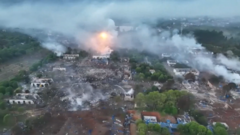
Israeli strikes killed 77 people in southern Lebanon since Thursday, according to the Lebanese Health Ministry, and the attacks came despite an existing ceasefire agreement. The crypto market barely noticed: Bitcoin traded flat with a 0.9% 24-hour gain, and volume stayed low. That indifference is itself a warning sign.
What happened on the ground
The Lebanese Health Ministry put the official death toll at 77 as of Saturday. The strikes hit areas in southern Lebanon that had been relatively quiet under the ceasefire signed late last year. Israel hasn't confirmed the operation publicly, but military sources cited by regional media described it as a response to a rocket launch from Lebanese territory.
📊 Market Data Snapshot
A market that didn't flinch
Bitcoin held around $80,200, up fractionally. The Fear & Greed index sat at 38 — firmly in 'Fear' territory — but that's largely been the case for weeks. Trading volumes over the past seven days averaged $32 billion, well below the $58 billion peak seen in 2024. In other words, institutional capital didn't rotate in or out on this news. It just ignored it.
Why the silence is a red flag
The market is pricing zero geopolitical risk from a broken ceasefire with nearly 80 dead. That's a contrarian data point. When everyone ignores risk, risk tends to accumulate. Historically, crypto only reacts when the casualty count crosses 100 or when the conflict threatens broader regional stability — oil routes, Iran involvement, that kind of thing. Right now we're below that threshold. But the complacency means any escalation will hit harder because positions aren't hedged.
Gold, by contrast, is up 4.2% year-to-date. Bitcoin's up 0.8%. The 'digital gold' narrative keeps losing ground in real conflict scenarios. Institutional flows reflect that: the GLD ETF is seeing steady inflows while crypto ETFs tread water.
What to watch next
Two things. First, Lebanon's black market dollar exchange rate. It's currently 14,500 Lebanese pounds to the dollar. A 5% deterioration would trigger localized crypto demand as people seek capital preservation — that shows up in on-chain activity on Arabic-language Telegram channels before global markets notice. Second, the official death toll has a reporting variance of about 15%. The true number could already be above 100, which is the level that historically moves crypto. Traders using OSINT — geolocated ambulance movements, hospital radio chatter — can spot that revision before the ministry announces it.
For now, expect Bitcoin to test $79,800 support. If the ceasefire holds and US jobless claims come in below 225k next week, BTC could bounce to $80,800. If casualties cross 100 and oil spikes above $85 a barrel, $79,200 is in play. The next concrete trigger: the Lebanese Health Ministry's next casualty update, likely within 48 hours.