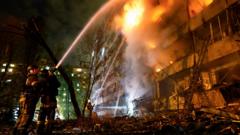
The European Union has added five new entries to its sanctions list against Russia, a move that follows a series of deadly attacks in Ukraine. The expansion is designed to tighten the screws on Moscow, and it lands at a moment when the bloc is under pressure to show it hasn't gone soft on the Kremlin.
Why the EU acted now
The new listings come in direct response to recent attacks that killed civilians in Ukraine. The EU hasn't named the individuals or entities involved, but the additions are part of a broader pattern: since the war began, the bloc has steadily widened its sanctions net. This round, though, feels different. It's the first since the latest wave of strikes, and it signals that Brussels is willing to keep escalating even as some member states grumble about the economic cost.
What the expanded sanctions could do
The practical effect is hard to measure. Five more entries won't cripple the Russian economy on their own, but they add to a thick layer of restrictions that have already cut off major banks, industries, and oligarchs from Western markets. The EU's hope is that every additional listing makes it harder for Russia to source components, move money, or find workarounds. That's the theory, at least. In practice, the impact often takes months to show up, and Russia has proven resourceful at dodging earlier measures.
Still, the symbolic weight is real. Each new round of sanctions reinforces the message that the EU isn't backing down. That matters because some European leaders have faced domestic pressure to ease up, especially as energy prices and inflation bite at home. By adding these entries now, the bloc is telling both Moscow and its own citizens that the line hasn't moved.
Geopolitical and market ripple effects
The broader consequences could stretch beyond Russia's borders. Analysts who track sanctions say that each expansion carries a geopolitical risk: the more isolated Russia becomes, the more unpredictable its responses might be. There's also the question of how markets read the move. Investors have been jittery about the war's trajectory, and any signal of escalation tends to move energy prices, defense stocks, and the ruble. The EU's decision to add these entries won't trigger a panic, but it does reinforce the prevailing view that the conflict won't wind down anytime soon.
For now, the immediate next step is unclear. The EU hasn't said when the new sanctions will formally take effect, nor whether more entries are in the pipeline. The bloc's next scheduled review of the sanctions regime is expected within a few months, and that's when the real test comes: whether member states can agree on yet another round, or whether the cracks in unity start to show.