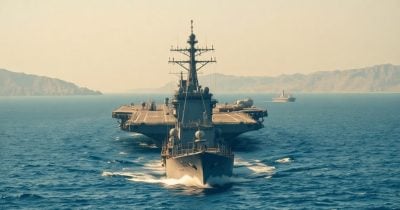
The European Union has imposed sanctions on a unit of Iran's Islamic Revolutionary Guard Corps Navy and two Iranian individuals, citing their role in restricting passage through the Strait of Hormuz. The move, announced Thursday, targets an IRGC Navy unit responsible for maritime operations in the strategic waterway, through which about a fifth of the world's oil passes. The two individuals, whose identities were not disclosed in the EU's official notice, are believed to be commanders or operatives linked to the unit.
What the sanctions target
The sanctions freeze any assets the sanctioned unit and individuals hold in EU member states and ban EU citizens and companies from doing business with them. Travel restrictions also apply to the two named individuals, barring them from entering the bloc. The EU statement described the actions as a response to “activities that threaten peace, security, and the freedom of navigation” in the Strait.
Why the Strait of Hormuz matters
The Strait, a narrow channel between Iran and Oman, is a chokepoint for global oil shipments. Iran has periodically threatened to close or disrupt traffic there as leverage in disputes with the West. The EU sanctions suggest Brussels sees Iran’s naval maneuvers—stopping or inspecting vessels, deploying speedboats near commercial ships—as a direct challenge to international law. The IRGC Navy operates separately from Iran’s regular navy and is often involved in asymmetric tactics in the Gulf.
Potential fallout for oil markets and security
Western officials say the sanctions could heighten geopolitical tensions with Tehran, already strained over Iran’s nuclear program and its support for armed groups in the Middle East. Traders are watching for any retaliation—Iran has previously responded to sanctions by stepping up its patrols or seizing tankers in the Strait. A disruption to tanker traffic there could drive up oil prices, though the immediate market reaction has been muted. Maritime security firms have warned that shipping insurers may raise premiums for vessels transiting the Gulf.
The EU’s move comes weeks after the United States and Britain imposed similar measures on Iranian entities over Strait of Hormuz incidents. Unlike Washington, which has a larger military presence in the region, Brussels relies mainly on economic pressure. Iranian officials have not yet issued a formal response to the EU sanctions, but state media outlets have characterized previous similar actions as “provocative” and a violation of international maritime law. Whether the bloc’s latest move will de-escalate or further inflame the situation remains the open question as tanker crews continue their passage through one of the world’s most volatile waterways.