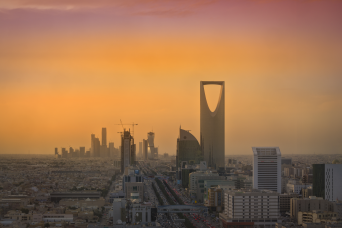
Explosions were reported in Riyadh, Saudi Arabia, on Tuesday, according to Tasnim news agency. The reports come amid heightened regional tensions that have already put neighboring airspace on edge. The blasts could disrupt flight paths and unsettle markets if they're confirmed to be more than isolated incidents.
What we know so far
Tasnim, an Iranian news agency, attributed the explosions to unspecified causes. No group has claimed responsibility, and Saudi authorities haven't issued a statement. The reports describe multiple blasts across the capital, but the exact locations and any casualties remain unconfirmed. Riyadh is home to key government ministries and the headquarters of Saudi Aramco, the state oil giant.
Without official confirmation, the scale of the incident is unclear. News of explosions in a major capital can move oil prices and stock futures within minutes, especially when the cause isn't immediately known. Traders in Asia and Europe will be watching for any sign that the blasts were an attack rather than an industrial accident or a controlled detonation.
Riyadh sits at the center of some of the world's busiest east-west flight corridors. Airlines reroute quickly when they perceive a risk over a conflict zone — and they don't wait for a government advisory. If the explosions turn out to be hostile, expect carriers to avoid Saudi airspace, adding hours to flights between Europe and Asia. That's happened before in the region, and it ripples through schedules for days.
Markets are already jittery
The reports land during a period of already elevated risk. Oil prices have been sensitive to any hint of supply disruption in the Gulf. A single headline about explosions in Riyadh can trigger a knee-jerk buying spree in crude futures, even before anyone knows what actually blew up. Equities in the region could open lower. Currency traders will watch the Saudi riyal, which is pegged to the dollar but still reacts to perceived instability.
For now, the lack of official detail cuts both ways. It leaves room for the worst-case scenario to circulate on social media, but it also means the incident could turn out to be minor — a gas explosion, a fire at a facility, something that doesn't escalate. The next few hours will determine which way it goes.
What to watch for next
The Saudi government's first statement will be the key signal. If officials call it an accident, markets will likely calm. If they blame an external actor, the regional temperature rises immediately. Airlines will also issue their own notices — watch for carriers announcing they're avoiding Saudi airspace. Tasnim's report is the only source so far; until a second outlet confirms the blasts, treat the details as provisional.
Riyadh hasn't said when it will comment. The city's international airport, King Khalid International, is a major hub. Any disruption there would be visible in flight-tracking data within minutes. For now, the story is developing, and the only certainty is that the region's tensions have found another flashpoint.