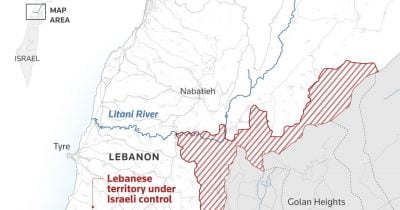
Hezbollah said it attacked Israeli troops near the southern Lebanese town of Nabatiyeh on Wednesday, a strike that threatens to deepen the already volatile security situation along the border. The group claimed responsibility in a brief statement, though Israeli officials did not immediately confirm casualties or damage.
The location and the claim
Nabatiyeh lies about 10 kilometers from the Israeli border, an area that has seen repeated exchanges of fire since the war in Gaza broke out last October. Hezbollah's statement, carried by its al-Manar television, said its fighters targeted an Israeli military position with guided missiles. No further details were provided. Israeli military spokespeople declined to comment on the report, and local media in Israel have not published any corroborating accounts of an attack in that specific sector.
The attack lands at a delicate moment for diplomatic efforts aimed at calming the frontier. International mediators have been pressing both sides to avoid a full-scale war, but each new strike erodes the possibility of a lasting ceasefire or a coordinated Israeli withdrawal from southern Lebanon. The United Nations Interim Force in Lebanon, which patrols the area, has repeatedly warned that such incidents risk dragging the region into a wider conflict. Hezbollah's claim also underlines the group's ability to operate despite Israeli airstrikes and ground operations inside Lebanon.
Regional fallout
Any escalation near Nabatiyeh carries risks beyond the immediate battlefield. Southern Lebanon is a patchwork of villages and farmland, and a broader engagement would likely displace civilians on both sides of the border. The attack also complicates the work of international peacekeepers, who have already faced restrictions on their movements. For Israeli troops stationed along the frontier, the threat from Hezbollah's precision-guided munitions remains a constant concern, one that no diplomatic process has yet resolved.
What comes next
There is no indication that either side intends to de-escalate in the short term. Hezbollah has linked its operations against Israel to the continuation of the Gaza war, and Israeli officials have said they will not tolerate attacks on their territory. The coming days are likely to bring more statements and possibly more strikes, as each side tests the other's red lines. The United Nations special coordinator for Lebanon has called for an immediate return to the cessation of hostilities agreed upon in 2006, but that framework has frayed badly. Whether Wednesday's attack near Nabatiyeh sparks a wider response from Israel, or remains another tit-for-tat exchange, is the question hanging over the region.