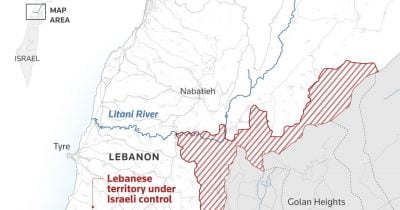
Escalating clashes between Hezbollah and Israel are chipping away at Lebanon's already shaky stability, slowing the country's economic recovery, and making diplomatic solutions to regional conflicts less likely. The renewed hostilities come as Lebanon struggles through a financial crisis that has crippled its banking system and left many citizens without basic services.
Stability under strain
The fighting is the latest in a series of confrontations that have flared along the border. For Lebanon, a country still reeling from a devastating port explosion and years of political paralysis, the clashes add another layer of uncertainty. Security analysts say the violence disrupts daily life and fuels fears of a broader conflict that could spill into residential areas. The Lebanese army has largely stayed on the sidelines, leaving Hezbollah to manage military operations in the south. That dynamic deepens the divide between the state and the heavily armed group.
Tourism, a rare bright spot in Lebanon's economy, has taken a hit. Travel advisories from foreign governments warn against visiting the south, and hotel bookings in Beirut have dropped off. Locals who once hoped for a summer rebound now brace for a longer downturn.
Economic recovery stalled
Lebanon's economy was already in freefall before the clashes. The local currency has lost more than 95% of its value since 2019, and the World Bank has described the downturn as one of the worst globally since the 1850s. The new hostilities make it even harder for the country to attract foreign investment or secure bailout deals. International lenders have tied their aid to structural reforms, but the political instability caused by the fighting gives lawmakers an excuse to delay those changes.
Small businesses near the border have shuttered. Farmers can't tend their fields near the frontier. Supply chains are disrupted when roads close due to shelling. The central bank has limited capacity to prop up the economy, and inflation continues to eat away at household budgets. For many Lebanese, the clashes are just another reason to try to leave the country.
Regional peace prospects dim
The fighting doesn't just affect Lebanon. It complicates broader efforts to calm tensions across the Middle East. Diplomatic initiatives aimed at brokering ceasefires or restarting peace talks have lost momentum. Neighboring countries like Syria and Jordan watch nervously as the cross-border strikes continue. Iran, which backs Hezbollah, and the United States, which backs Israel, both have interests in the region, but their proxies are locked in a cycle of retaliation that shows no sign of easing.
U.N. peacekeepers stationed in southern Lebanon have reported repeated violations of the ceasefire line. Their ability to monitor the situation is limited by the intensity of the exchanges. No formal talks to de-escalate have been announced, and neither side appears willing to back down. The result is a stalemate that grinds down any hope for a diplomatic breakthrough.
The coming weeks will test whether Lebanon's leaders can find a way to insulate the country from the worst of the violence. For now, the fighting continues, and so does the damage to Lebanon's stability and its future.