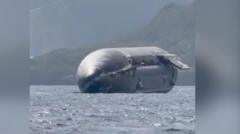
Apparent human remains, including a jaw with teeth, were found at Lake Mead this week as the reservoir hit a record low. A witness reported the discovery, which underscores how far the drought has pushed the water line. It's the kind of find that would have been impossible just a few years ago.
What was found
The remains are skeletal, with what appears to be a human jaw still attached to teeth. The witness who spotted them described the scene to authorities, who are now working to identify the individual. This isn't the first time Lake Mead's receding shore has given up secrets — but each new discovery makes the drought's severity harder to ignore.
📊 Market Data Snapshot
The energy angle
Lake Mead isn't just a reservoir; it's the lifeblood of the Hoover Dam, which generates hydroelectric power for millions across the Southwest. That includes a growing number of Bitcoin mining operations in Nevada and Arizona that rely on cheap electricity from the dam. As the water level drops, so does the dam's generation capacity. Less water means less pressure to spin the turbines, and that means less power for everyone.
Miners on the line
Miners often sign interruptible power contracts — they get lower rates but agree to be cut off when the grid gets tight. In a shortage, utilities prioritize homes and hospitals over industrial loads. That's a risk most market participants ignore while they're watching ETF inflows and macro liquidity. But the math is simple: if Hoover Dam produces less, electricity prices climb, and the cost of mining a single Bitcoin goes up. Some operations may already be looking at relocating to regions with cheaper, more stable power.
A slow-burn risk
The Bureau of Reclamation is expected to declare a shortage on the Colorado River later this year, a move that would trigger mandatory water and power reductions for downstream states. For miners, that could mean the lights go out first. The longer-term picture is just as uncomfortable. Recurring climate disasters are likely to accelerate ESG-driven regulation on energy-intensive industries, including proof-of-work mining. But this isn't a sudden shock; it's a slow grind. Miners that diversify into solar, wind, or battery storage will come out ahead. Those locked into hydro contracts face a shrinking cushion.
The remains at Lake Mead are a human tragedy and a warning. The water isn't coming back anytime soon, and the energy crunch that comes with it is only beginning.