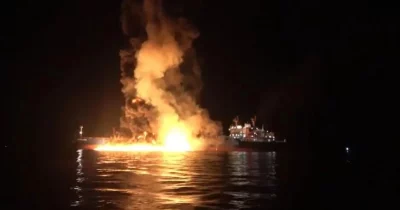
A drone strike hit a facility in the United Arab Emirates, and the International Atomic Energy Agency has issued a warning about the nuclear dangers that could follow. The attack, which targeted an unidentified site, has raised concerns that an asymmetric threat—one that bypasses conventional defenses—could trigger a radiological incident anywhere. The IAEA’s statement comes amid a broader push for tighter global security measures against such remote-controlled attacks.
The drone strike
Details about the facility remain scarce. The UAE, a federation of seven emirates, has not publicly identified the type of site that was struck or whether any nuclear material was present. But the fact that the IAEA felt compelled to speak out suggests the incident was serious enough to merit international attention. The agency did not disclose damage assessments or casualty figures, only noting the event “underscores the urgent need for enhanced global nuclear security measures against asymmetric threats.”
This is not the first time a drone has been used to threaten a nuclear-related site. Over the past decade, conflicts in the Middle East and elsewhere have shown how small, unmanned aircraft can slip past radar and air defenses to hit sensitive infrastructure. What makes the UAE case stand out is the IAEA’s direct involvement. The agency rarely comments on specific incidents unless it sees a systemic risk that could affect countries beyond the one attacked.
IAEA’s warning
The IAEA’s alert was brief but pointed. It said the strike “highlights the vulnerability of nuclear facilities to acts of sabotage by non-state actors using simple, off-the-shelf technology.” The agency called on member states to review and reinforce their physical protection regimes—especially the perimeter defenses that are meant to stop an airborne intruder. Many existing security standards were written for an era when the main worry was a truck bomb or an insider threat; drones were not part of the calculation.
IAEA Director General Rafael Grossi has previously warned that the spread of drone technology outpaces the updating of safety protocols. In a 2023 speech, he noted that a single quadcopter carrying a small explosive could breach a reactor’s outer barrier and release radioactive material into the environment. The UAE incident appears to have turned that theoretical risk into a concrete case.
Asymmetric threats and global security
The concept of “asymmetric threat” is central to the IAEA’s concern. It describes an attacker who uses unconventional methods to exploit a defender’s vulnerabilities—in this case, cheap drones against expensive, fortified nuclear installations. The agency argues that current international rules, such as the Convention on the Physical Protection of Nuclear Material, do not adequately address this type of scenario. Member states have been slow to adopt counter-drone technologies—radar jammers, net launchers, electronic warfare systems—because of cost and the challenge of integrating them without interfering with normal operations.
For the UAE, the drone strike raises immediate questions about its own nuclear program. The country operates the Barakah nuclear power plant, a four-reactor complex that started commercial operations in 2020. The IAEA did not say whether the targeted facility was part of that plant or something else—a research reactor, a storage site, or a fuel fabrication area. If it was Barakah, the implications for Gulf energy security are severe. If it was a smaller facility, the lesson is that no site is too minor to be struck.
Neither the UAE government nor the IAEA has announced any formal investigation or new security measures since the strike. That silence is itself telling. The next move likely comes at the IAEA’s Board of Governors meeting, where member states could push for an emergency resolution or a technical review of drone defenses. The agency has not set a date for that discussion, but the pressure to act is mounting.