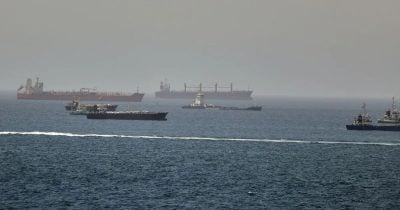
Iran launched an attack on US destroyers in the Strait of Hormuz, a move that threatens to destabilize an already volatile region and could push Washington and Tehran closer to open confrontation. The strike, which targeted American naval vessels transiting the strategic waterway, marks a significant escalation in the long-running shadow war between the two countries.
Attack in the Strait of Hormuz
US Navy destroyers came under fire while passing through the narrow chokepoint, a vital artery for global oil shipments. Details of the attack remain limited, but the incident confirms that Iran is willing to directly engage American forces at sea. The Strait of Hormuz has long been a flashpoint—Iran has threatened to close it before—but this is the first time the Islamic Republic has openly struck US warships there.
The attack didn't come out of nowhere. Tensions have been building for months, with Iranian proxies striking US bases and commercial shipping. But hitting a destroyer is a different order of escalation. It sends a clear message: Iran is ready to raise the stakes, even if it means a direct fight with the US Navy.
Regional Stability at Risk
The immediate consequence is a spike in military tensions across the Middle East. US forces in the Gulf have already gone to a higher alert status. Allied navies—including those of Saudi Arabia, the UAE, and the UK—are likely to tighten their own patrols. The risk of miscalculation is now higher than it's been in years. A single errant missile or a misread signal could trigger a broader conflict that no one wants.
Oil markets reacted instantly. Brent crude jumped on the news, and shipping insurers are expected to raise premiums for vessels transiting the Strait. That hits the global economy, not just the region. For countries heavily dependent on Gulf oil—like Japan, India, and South Korea—the attack raises serious questions about supply security.
Iran's move also complicates the US military posture. The Pentagon now has to weigh whether to retaliate directly or respond through other means. A tit-for-tat cycle could spiral quickly. Both sides have plenty of capabilities—Iran has missiles, drones, and naval mines; the US has air power, carrier strike groups, and special operations. The Strait is now a potential flashpoint every day.
Diplomatic Path Narrowed
Even before the attack, diplomatic efforts to de-escalate were stalled. The US had been trying to revive indirect talks on Iran's nuclear program, but those went nowhere. The European Union's mediation attempts also failed to produce a breakthrough. Now, with American warships under fire, the window for negotiation has shrunk further.
Iran's leadership appears to have concluded that pressure—not talks—is the way to secure concessions. By attacking US destroyers, Tehran is betting that Washington will eventually back down rather than risk a costly war. That bet is a gamble. The US has its own red lines, and hitting a destroyer may be one of them.
The attack also isolates Iran diplomatically. Even allies like Russia and China, which have backed Tehran in the UN, may find it hard to defend a direct assault on a US Navy vessel. The UN Security Council is likely to hold an emergency session, though a resolution condemning Iran would almost certainly face a veto from Moscow or Beijing.
What happens next depends on Washington's response. The US has options: a limited retaliatory strike, increased sanctions, or a naval blockade. Each carries risks. A blockade could cut off Iran's oil exports entirely, but it would also be an act of war. Retaliatory strikes could hit Iranian missile sites or naval bases, but they might not deter future attacks.
The unresolved question is whether this attack is a one-off or the start of a new phase in US-Iran conflict. The answer may come in the next few days, as both sides decide their next moves. Until then, the Strait of Hormuz remains the most dangerous waterway on Earth.