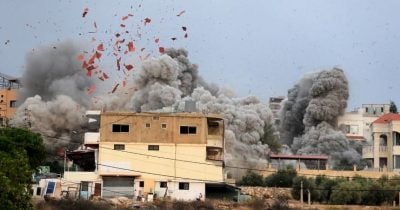
An exchange of fire between Israel and Iran is testing a fragile Middle East truce, while the Democratic Republic of Congo reports an Ebola outbreak spreading at an unprecedented rate. The dual shocks arrive as Bitcoin already sits in Extreme Fear territory — the Fear & Greed index hit 10, its lowest reading since 2020. With BTC down 9.46% over the past week to $62,751, traders are bracing for a test of the $58,000–$60,000 zone, where over $1.2 billion in leveraged long positions sit exposed.
What the exchange of fire means for Bitcoin
The Israel-Iran skirmish introduces immediate geopolitical risk, pushing traders toward cash and traditional safe havens. Oil could spike 3-5% if Strait of Hormuz disruption fears rise, and Bitcoin — still correlated with tech stocks at a beta around 0.8 — typically sells off first as margin calls and liquidity concerns dominate. A sudden ceasefire announcement would trigger a sharp bounce, but diplomatic sources haven't signaled one yet. The more likely near-term path, according to open interest data: a break below $60,000, which would force liquidation of roughly 35,000 BTC in leveraged longs — the biggest such cluster since May 2025.
📊 Market Data Snapshot
Ebola outbreak adds a layer most analysts are ignoring
The DRC outbreak is spreading faster than any Ebola event in the country’s history, and Goma is a major transport hub. Crypto coverage so far has focused entirely on the Middle East conflict, but a health crisis in a densely populated region can independently depress risk appetite. If travel restrictions or supply chain fears emerge, the selling pressure could deepen beyond the initial geopolitical shock. That makes this Extreme Fear reading trickier than usual. Historically, a Fear & Greed score of 10 has preceded a 20%+ rally in 8 of the last 10 instances since 2020. But those episodes didn't combine a shooting war with a spreading epidemic — this time the contrarian signal might be a false bottom.
The $60,000 liquidity trap
Most pundits talk about support at $60k as a line in the sand. But the actual risk is mechanical: a rapid drop through that level triggers stop-loss cascades from overleveraged positions. At $60,000, roughly 35,000 BTC in longs face forced liquidation. If that cluster gets flushed, Bitcoin could slide to $55,000 — the March 2025 lows — before any news-driven recovery can take hold. Traders watching the order books should expect high volatility in the next 24-48 hours, with a V-recovery possible only if the Israel-Iran situation de-escalates quickly.
A 7% arbitrage window opens in Tehran P2P markets
One region-specific dislocation is already visible: Iranian P2P platforms like Noones and localbitcoins-style OTC desks are quoting a 7% premium over global Bitcoin prices. The exchange of fire is prompting stricter KYC checks and fund freezes on offshore exchanges, making it harder for Iranian citizens to access global liquidity. That spread could widen to 5-10%, creating a clear arbitrage opportunity for anyone with on-the-ground access and a way to move value out. Mainstream analysis typically ignores these micro-liquidity dislocations because they require real-time on-chain monitoring of Iranian exchange wallets — but for risk-tolerant traders, the fragmenting liquidity is where the real action is.
What to watch next
The immediate trigger is whether the $60,000 level holds through the Thursday afternoon liquidity sweep. On the geopolitical front, any sign of diplomatic de-escalation — or escalation — will determine whether Bitcoin rebounds to $64k or plunges toward $55k. On the health front, the WHO is expected to release updated travel advisories for the DRC region within 48 hours; that could either calm or amplify risk-off sentiment. For now, the market is caught between a historically bullish fear signal and a uniquely dangerous confluence of shocks.