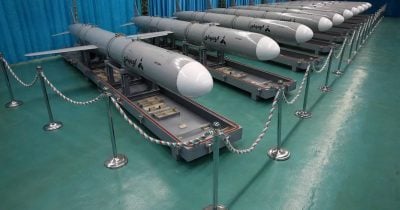
Iran launched missiles targeting the Red Sea cities of Aqaba in Jordan and Eilat in Israel, according to reports. The attack comes as a prediction market now gives a 24.5% probability that Israel will close its airspace by July 31.
The Targets: Aqaba and Eilat
Aqaba is Jordan's only coastal city, a key port and tourist hub on the Gulf of Aqaba. Eilat, just across the border, is Israel's southernmost city, also a major tourism and travel destination. The missile launch directly threatens both cities, raising the stakes in a region already on edge.
Details on the exact number of missiles and any damage remain unclear. Authorities in both countries have not yet issued official statements on the attack.
Prediction Market Odds
A prediction market — a platform where users bet on the outcome of future events — now shows a 24.5% chance that Israel will close its airspace by the end of July. The figure reflects a non-trivial level of concern among participants about escalating tensions.
Prediction markets are not always accurate, but they offer a real-time gauge of sentiment. The 24.5% probability is notable given that such markets typically show low odds for major disruptions unless events on the ground shift expectations.
What Airspace Closure Would Mean
If Israel were to close its airspace, the move would ground flights in and out of the country, affecting airlines, travelers, and cargo operations. Eilat's Ramon Airport, a key gateway for tourists, would be directly impacted. Regional air travel could also face disruptions, as Israeli airspace sits at a crossroads for flights between Europe, Asia, and Africa.
The July 31 deadline is less than two weeks away. Whether the prediction market's odds rise or fall will depend on how the situation develops in the coming days.
The missile launch and the betting odds together paint a picture of a volatile moment. For now, the question is whether the attack is a one-off or the start of a broader escalation — and whether Israel's airspace will stay open.