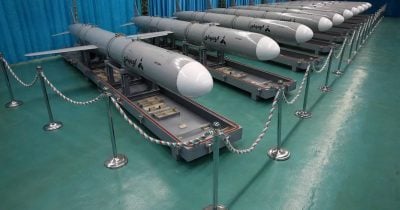
Iran fired missiles toward Jordan, escalating tensions in a region already on edge. The launch drew an immediate warning from Israel, which said the move could trigger a wider conflict beyond the immediate target.
What the missile launch means
The missiles were directed at Jordan, a key U.S. ally and neighbor to both Israel and Iraq. Details on the exact number of missiles or their intended targets were not immediately available. The attack marks a significant step by Iran, which has previously relied on proxy forces rather than direct strikes against a state with close ties to Washington.
Jordan has not yet publicly responded to the launch. The country has often served as a buffer in regional disputes, hosting U.S. military personnel and maintaining a peace treaty with Israel. Any direct threat to Jordan could force a broader military response from the U.S. or its allies.
Israel's warning and the risk of spillover
Israeli officials warned that the missile launch could have consequences beyond Jordan. They pointed to the possibility of the conflict spreading to other fronts, including the Red Sea and the Gulf. The warning came as Israel continues to face threats from Iranian-backed groups in Lebanon, Syria, and Yemen.
The Houthi movement in Yemen, which has received support from Iran, has already targeted Israel with drones and missiles in the past. A prediction market now puts the chance of Houthi military action against Israel by July 31, 2026, at 15%. That figure reflects a real but not imminent risk, according to traders on the platform.
Market signals and regional uncertainty
Prediction markets, where participants bet on the likelihood of future events, have become a rough gauge of geopolitical risk. The 15% probability for Houthi action against Israel is higher than it was before the missile launch, though still below levels seen during previous escalations. The market does not specify the type of action — it could range from a drone strike to a full-scale attack.
The same market had earlier assigned a lower probability to direct Iranian strikes. The missile launch toward Jordan has shifted perceptions, even if the immediate fallout remains unclear.
What happens next
Diplomatic channels are likely to be active in the coming days. The U.S. has not yet issued a formal statement on the missile launch, but its response will be closely watched. For now, the region waits to see whether Jordan retaliates, whether Israel takes preemptive steps, and whether the Houthis follow through on the 15% chance the market has priced in. The July 31, 2026 deadline for that prediction is still more than a year away — plenty of time for the situation to change.