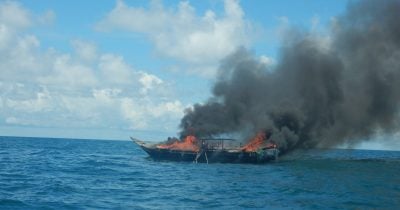
Iran launched missiles toward Jordan this week, with smoke seen rising over the Red Sea port city of Aqaba. The attack marks a significant escalation in regional hostilities, though details on casualties or damage remain unclear.
Missile strike and immediate aftermath
Witnesses reported seeing smoke over Aqaba, a key tourist and shipping hub in southern Jordan. The missiles were fired from Iranian territory, according to initial reports. Jordanian authorities have not yet confirmed the source or issued an official statement on the incident.
The launch comes amid heightened tensions across the Middle East. Iran has previously threatened to target Jordan if it allowed its airspace or territory to be used for attacks against Iran. This is the first known instance of missiles being fired directly toward Jordan in the current cycle of violence.
Prediction market signals growing risk
A prediction market tracking the likelihood of an Israeli airspace closure now puts the probability at 20.5% by July 31. The market, which allows traders to bet on geopolitical events, suggests a roughly one-in-five chance that Israel will shut its skies within the next two months.
The figure has risen sharply in recent days, though the exact trigger for the increase is not specified. The market's deadline coincides with the end of July, a date that may reflect expectations of further escalation or a specific military timeline.
Prediction markets aggregate the bets of thousands of traders and are often used as real-time indicators of geopolitical risk. While not infallible, a 20.5% probability is considered significant for an event of this magnitude.
What happens next
The immediate question is whether Israel will respond to the missile launch by closing its airspace, a move that would disrupt flights across the region and potentially trigger a broader crisis. The prediction market suggests traders see this as a real possibility before the end of July.
For now, the smoke over Aqaba serves as a stark reminder of how quickly the conflict can spread. Jordan, a key Western ally and neighbor to both Israel and Iraq, finds itself in a precarious position. The country has not yet announced any retaliatory measures or changes to its airspace status.