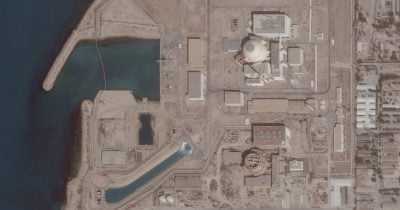
Iran's top officials escalated rhetoric this week, warning they could close the Strait of Hormuz and block oil exports from the region if attacked. The threats sent crude prices higher and pushed Bitcoin below $66,000, as traders weighed the risk of a broader conflict that could keep inflation sticky and delay Federal Reserve rate cuts.
Iran's 'eye for an eye' warning
Foreign Minister Seyed Abbas Araghchi said Tehran would respond to any aggression against its infrastructure with an 'eye for an eye' approach, and that those who support such aggression would be considered legitimate targets. Parliament Speaker Mohammad Bagher Ghalibaf went further, stating that if Iran cannot sell its oil, no one else in the region will, and that the Strait of Hormuz situation will not return to pre-war conditions.
The Strait of Hormuz is the world's most important oil chokepoint, handling about one-fifth of global oil supply, according to the U.S. Energy Information Administration. Iran ships roughly 1.5 million barrels per day through it, almost all to China. Tehran made similar threats during sanctions disputes in 2011 and 2012 but never actually followed through.
Oil spikes on Strait of Hormuz threats
West Texas Intermediate crude rose about 2.25% to near $89 per barrel, while Brent crude traded close to $96 per barrel. The jump reflects real concern that a blockade — even a temporary one — would disrupt global supply chains and push energy costs higher.
The timing isn't great for central banks. Higher oil prices feed directly into inflation, making it harder for the Federal Reserve to cut interest rates. That's a headwind for risk assets like Bitcoin, which tend to thrive in low-rate environments.
Why Bitcoin slipped
Bitcoin fell below $66,000, down about 0.4% on the day, after giving back earlier gains. The move mirrors a similar reaction in early July, when former President Trump declared the US-Iran truce deal dead and markets repriced geopolitical risk.
The logic is straightforward: if oil keeps climbing, inflation stays elevated, the Fed stays hawkish, and speculative assets take a hit. Bitcoin's drop this week is small, but it shows the market is watching the Middle East closely.
What traders are watching
For now, the key question is whether Iran's threats are bluster or a real shift in strategy. The 2011 and 2012 episodes suggest Tehran has used the Strait of Hormuz as a bargaining chip before, without pulling the trigger. But the current rhetoric is sharper, and the geopolitical backdrop is different.
Oil markets will be the first to signal if tensions are escalating. Bitcoin traders, meanwhile, are keeping an eye on the Fed's next move — and on whether this week's dip is a buying opportunity or the start of a deeper pullback.