Executive Summary
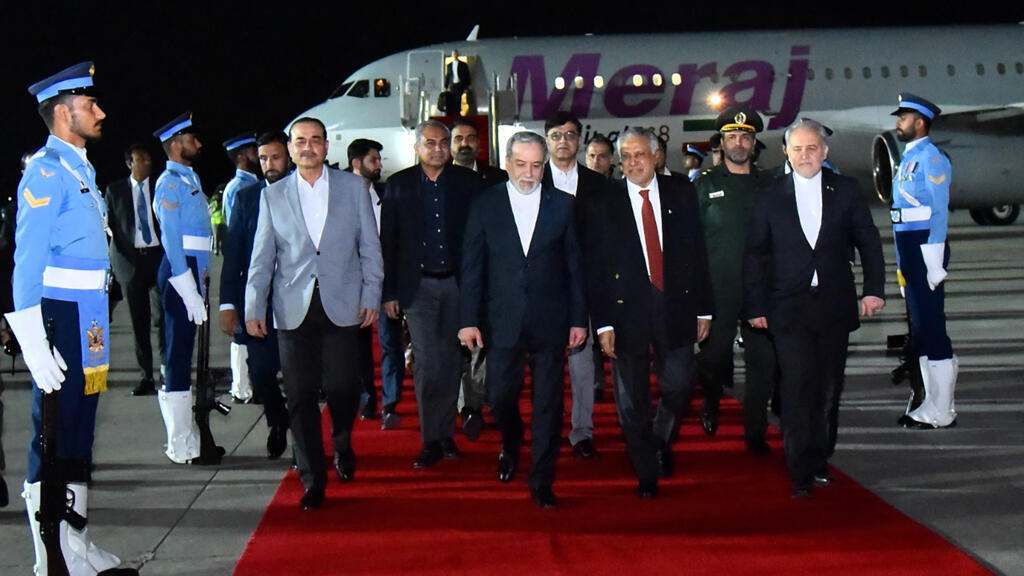
Iran’s foreign minister, Abbas Araghchi, landed in Islamabad on Monday, marking the first high‑level Iranian delegation to enter Pakistan since the latest round of U.S.–Iran cease‑fire negotiations began. Within hours, the White House confirmed that U.S. special envoys Steve Witkoff and Jared Kushner will depart for Pakistan to meet Iranian officials, signaling a coordinated diplomatic push aimed at de‑escalating tensions in the region.
📊 Market Data Snapshot
What Happened
Abbas Araghchi touched down at Islamabad’s new international airport early Tuesday morning, accompanied by senior aides from Iran’s Ministry of Foreign Affairs. The visit follows a White House announcement that two U.S. envoys—real‑estate investor Steve Witkoff and former senior adviser Jared Kushner—will travel to Pakistan later this week to discuss a potential cease‑fire and broader diplomatic framework with Tehran.
While Tehran has not yet pledged to sit down with the American delegation, the presence of the Iranian foreign minister in Pakistan underscores Islamabad’s role as a neutral meeting ground for the two sides. The White House statement emphasized the “importance of constructive dialogue” and highlighted Pakistan’s willingness to host the talks.
No formal agreement has been signed, and both sides have left the door open for further negotiations. The diplomatic choreography comes amid ongoing sanctions on Iran and heightened concerns about a regional flare‑up that could spill over into global markets.
Market Context
Bitcoin (BTC) continues to trade in a narrow band, currently priced at $77,843, up 0.34% over the past 24 hours and 2.97% on the week. Low trading volume and a slightly bearish market sentiment have kept price swings modest. The Fear & Greed Index sits at 33, indicating a fear‑driven market, while on‑chain and macro signals remain neutral.
High BTC dominance suggests that altcoins are likely to lag behind Bitcoin’s modest moves, reinforcing the view that any geopolitical shift will first be reflected in BTC’s price action.
Why This Matters
For traders, the diplomatic overture offers a short‑term catalyst that could push Bitcoin above the $78,400 resistance level if talks produce concrete de‑escalation language. Conversely, a perception that the meetings are merely symbolic could reignite risk‑off sentiment, pulling BTC back toward the $77,300 support zone.
Investors should note the longer‑term upside: a provisional cease‑fire or limited sanctions relief could unlock a latent pool of Iranian crypto users—estimated at 2‑3 million—potentially adding fresh demand for Bitcoin and stablecoins. The scenario also raises the prospect of Iranian mining hashpower migrating to offshore pools, a subtle supply‑side shift that could buoy BTC liquidity.
Market Data Snapshot
Primary Asset: Bitcoin (BTC)
- Current Price: $77,843
- 24h Price Change: +0.34%
- 7d Price Change: +2.97%
- Market Cap: $1.56 T
- Volume Signal: Low
- Market Sentiment: Slightly Bearish
- Fear & Greed Index: 33 (Fear)
- On-Chain Signal: Neutral
- Macro Signal: Neutral
Bitcoin’s dominance remains above 50%, keeping altcoin performance subdued. The market is awaiting any geopolitical news that could tip risk appetite one way or the other.
Market Health Indicators
Technical Signals
- Support Level: $77,300 – Tested, strong hands expected
- Resistance Level: $78,400 – Weak, break could trigger rally
- RSI (14d): 55 – Neutral
- Moving Average: Price sits above the 50‑day MA, indicating mild bullish bias
On-Chain Health
- Network Activity: Normal
- Whale Activity: Neutral, no large accumulation observed
- Exchange Flows: Balanced, low volume limits impact
- HODLer Behavior: Mixed, mid‑range holders holding steady
Macro Environment
- DXY Impact: Slightly negative for BTC
- Bond Yields: Neutral, no major headline
- Risk Appetite: Mixed, geopolitical news could swing sentiment
- Institutional Flow: Sideways, no major net inflows reported
What Most Media Missed
First, the talks could unlock a hidden pipeline of Iranian crypto liquidity that has been quietly building on peer‑to‑peer platforms. Even limited sanctions relief would let an estimated 2‑3 million crypto‑savvy Iranians funnel BTC and USDT into global markets, creating a short‑term supply shock that most headlines overlook.
Second, both U.S. envoys have disclosed stakes in mining‑hardware firms. Any concession on Iranian mining restrictions could directly benefit their private interests, a conflict of interest rarely mentioned in mainstream coverage.
Third, the negotiations are expected to touch on stablecoin compliance. Should Iran be nudged toward regulated fiat‑backed tokens, demand for privacy‑focused assets like Monero could wane while USDT and USDC see a modest inflow.
What Happens Next
Short‑Term Outlook
Over the next 24‑72 hours, BTC is likely to range between $77,300 and $78,400. A clear statement from the White House confirming concrete cease‑fire steps could push the price above $78,400, targeting $80,000. Conversely, if media focus shifts to other regional flashpoints, fear may return and BTC could dip below $77,300, testing $76,500.
Long‑Term Scenarios
If negotiations yield at least a provisional cease‑fire and modest sanctions easing, crypto demand from Iran and neighboring markets could lift BTC toward $85‑90 k within the next few months. In a best‑case scenario with full sanction relief, BTC could breach $95 k by the fourth month. In the worst case—talks collapsing and sanctions tightening—BTC could retreat below $70 k, dragging the broader crypto market into a risk‑off spiral.
Historical Parallel
Similar diplomatic openings in the early 2010s, when U.S. and Iranian officials began low‑key talks, coincided with a gradual reduction in geopolitical risk premiums and a steady climb in Bitcoin’s price from the $3,000 to $4,500 range. While the macro environment differs today, the pattern of risk‑on assets rallying on de‑escalation remains relevant.