Iran’s deepening internal divisions are casting a long shadow over potential US-Iran negotiations, raising doubts about whether any deal can be reached — and if it can, whether it will hold. The fractures, which pit hardliners against moderates within Iran’s leadership, are already unsettling regional stability and sapping market confidence in a future agreement.
What’s splitting Tehran
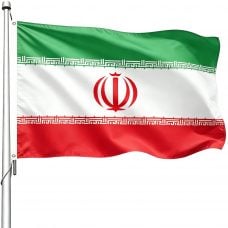
The rift is not new, but it has widened in recent months. Hardliners in Iran’s parliament and security apparatus argue that any negotiation with the United States amounts to a concession to the West. Moderates, including some in the foreign ministry, see talks as the only way to lift crippling economic sanctions. The result is a government that speaks with two voices — one open to dialogue, the other openly hostile.
This internal tug-of-war has already delayed Iran’s response to informal US overtures. Diplomats familiar with the backchannel say Tehran has not yet named a lead negotiator, a sign that the leadership cannot agree on a mandate. Without a unified position, any talks that do start will be fragile from the first handshake.
Why markets are watching
Investors had begun pricing in a thaw. Oil traders, in particular, had bet that a US-Iran deal could bring Iranian crude back to global markets, potentially lowering prices. But the political noise out of Tehran has reversed some of that optimism. The risk premium on Middle East oil has crept up in recent weeks, and currency markets in the Gulf have shown jitters.
“The market was already skeptical about a quick breakthrough,” one commodities analyst said. “Now it’s starting to question whether there will be a breakthrough at all.” The analyst spoke on condition of anonymity because they were not authorized to comment publicly.
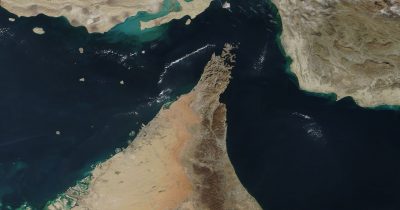
Beyond oil, broader regional stability is at stake. Iran’s internal discord weakens its ability to project a consistent foreign policy, which in turn emboldens adversaries and unsettles allies. Saudi Arabia and the United Arab Emirates, both key US partners, have watched the infighting with concern, fearing that a distracted Iran might lash out through proxies in Yemen, Iraq, or Lebanon.
What a stalled process means
If the internal divisions prevent meaningful talks, the status quo will persist: Iran continues to enrich uranium beyond agreed limits, the US maintains its maximum-pressure sanctions, and the region remains on edge. That scenario is already playing out. The International Atomic Energy Agency reported last month that Iran’s stockpile of enriched uranium has grown, though inspectors still have access to declared sites.
For the US, the lack of a unified Iranian counterpart complicates any negotiation strategy. Washington has said it prefers a diplomatic solution but has not ruled out other options. Without a credible negotiating partner in Tehran, the US may be forced to either accept a slow erosion of its nonproliferation goals or escalate pressure — steps that could further destabilize the region.
Unanswered questions
The biggest unknown is whether Iran’s supreme leader, who has the final say on nuclear policy, will side with the hardliners or give the moderates room to talk. His public statements have been ambiguous, urging both resistance and flexibility. Until he clarifies his position, the internal divisions will continue to block progress.
Meanwhile, the next round of indirect talks — if it happens — has no date. European mediators are waiting for a signal from Tehran. That signal may not come until Iran’s internal power struggle is resolved, a process that could take months. For markets and regional powers, that wait is the real risk.