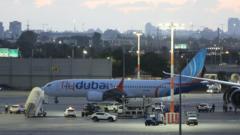
An airplane flying to Israel dropped roughly 17,000 feet — about 5,200 meters — in less than two minutes before the flight was diverted, according to reports of the incident. A passenger on board described the experience as feeling like a rollercoaster.
That works out to an average descent rate of roughly 8,500 feet per minute, a figure that sits well outside what commercial aircraft do in normal operations. Routine descents run between 1,500 and 3,000 feet per minute; even an emergency descent, the kind triggered by a loss of cabin pressure, typically tops out around 5,000 to 6,000 feet per minute.
Roughly triple a standard emergency descent
The numbers are the story here. A drop that fast implies something beyond turbulence — a pressurization failure, a flight-control problem, or an aggressive commanded descent by the crew. We don't know which yet, and the facts released so far don't say. The flight was diverted after the descent, and no cause has been confirmed.
📊 Market Data Snapshot
What is confirmed is the passenger account: rollercoaster. That's a word people use when the floor drops out from under them, and it's consistent with an aircraft pitched steeply nose-down for a sustained period.
Why Israel-bound routes carry extra weight
Any aviation incident near Israeli airspace lands against a backdrop of heightened regional tension. That matters for how the news gets read — not just as a safety story, but as another data point in a stretch of geopolitical instability that markets have been pricing in for months.
Crypto markets, for their part, have been sitting in greedy territory. Bitcoin is trading at $83,756 with a market cap of $1.68 trillion, up 0.53% over 24 hours but down 0.76% on the week. Volume is running normal, and BTC dominance remains high — a setup where altcoins tend to underperform when risk appetite wobbles.
The Fear & Greed index reads 74, which is squarely in greed. Greedy markets are the ones that flinch hardest at unexpected headlines, simply because positioning is crowded on the optimistic side.
The safe-haven trade, again
Geopolitical shocks have repeatedly pushed capital toward Bitcoin as a censorship-resistant, portable store of value. Whether that holds here depends entirely on whether this is an isolated aviation event or the start of something broader. Right now there's no evidence pointing to the latter.
For traders, the mechanical read is straightforward: a sudden risk-off move would likely see BTC outperform high-beta altcoins, with dominance pushing higher. ETH and smaller tokens would take the brunt. The reverse applies if the incident gets downplayed and risk-on sentiment snaps back.
There's a second-order angle worth flagging that most coverage will skip. Israel has one of the denser crypto and blockchain startup clusters in the world. A serious aviation safety scare doesn't just affect travel — it can complicate business travel, investor visits, and the routine logistics that keep a tech ecosystem running. That's a slow-burn effect, not a headline one, but it's real.
What to watch
The immediate question is the cause. If investigators find a mechanical or structural fault, the implications widen considerably — potentially grounding similar aircraft models and disrupting operations on routes to and from Israel. That's a much bigger story than a single diverted flight.
For now, watch for any official statement on the cause and whether the diversion is treated as routine or exceptional. Bitcoin's reaction, if any, will tell you whether the market is reading this as a geopolitical signal or just an aviation incident. So far, it looks like the latter.