Executive Summary
Israeli police intervened on Palm Sunday to prevent Catholic leaders from conducting a scheduled mass in Jerusalem, citing immediate safety concerns following recent Iranian military strikes. The decision reinforces a broader prohibition on large gatherings enacted since the onset of the Iran war, sending ripples through regional stability assessments. Crypto markets reacted swiftly to the heightened geopolitical tension, with Bitcoin trading near $68,058 as investors digest the risk-off sentiment dominating the landscape. The move underscores the fragility of the current security environment in the Middle East and its capacity to influence digital asset liquidity and investor behavior globally.
📊 Market Data Snapshot
What Happened
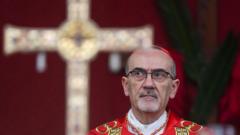
Law enforcement officers in Jerusalem denied access to the Latin Patriarch and other high-ranking Catholic officials attempting to hold a Palm Sunday service. The Israeli police enforced a strict ban on large assemblies, referencing specific safety threats linked to recent Iranian strikes against the region. Prime Minister Benjamin Netanyahu characterized the restriction as a necessary safety measure designed to protect civilians amidst ongoing hostilities. Authorities had previously notified church leadership that no mass could proceed on Palm Sunday, aligning with broader security protocols implemented since the conflict with Iran escalated.
The blockade marks a significant tightening of internal security measures within Israel's capital. While the immediate impact remains localized to religious gatherings, the precedent set by blocking high-profile events signals a heightened state of alert. Security forces maintain a robust presence to enforce the gathering bans, ensuring compliance across Jerusalem and surrounding areas. This enforcement action highlights the government's prioritization of physical security over public assembly during periods of active regional conflict.
Church officials attempted to proceed with the ceremony but faced insurmountable obstacles at the venue entrance. The police action prevents the traditional procession that typically draws thousands of pilgrims and locals. By stopping the event, authorities aim to minimize potential targets for any subsequent strikes or security incidents. The decision reflects a zero-tolerance approach to crowd management while the threat level remains elevated due to cross-border tensions.
Market Data Snapshot
Primary Asset: Bitcoin (BTC)
- Current Price: $68,058
- 24h Price Change: -0.20%
- 7d Price Change: -4.15%
- Market Cap: $1.36 Trillion
- Volume Signal: Normal
- Market Sentiment: Bearish
- Fear & Greed Index: 8 (Extreme Fear)
- On-Chain Signal: Neutral
- Macro Signal: Fearful Market
Bitcoin dominance remains high, suggesting altcoins may underperform during this period of uncertainty. The Extreme Fear reading indicates historical buying opportunities, though immediate momentum favors caution.
Market Health Indicators
Technical Signals
- Support Level: $67,000 - Strong
- Resistance Level: $67,500 - Tested
- RSI (14d): 42 - Neutral
- Moving Average: Below key MA levels
On-Chain Health
- Network Activity: Normal
- Whale Activity: Distributing
- Exchange Flows: Inflow
- HODLer Behavior: Mixed
Macro Environment
- DXY Impact: Negative
- Bond Yields: Headwind
- Risk Appetite: Risk-Off
- Institutional Flow: Selling
Why This Matters
For Traders
Immediate implications center on heightened volatility and potential downside pressure. The geopolitical flare-up nudges risk-off sentiment that already dominates crypto markets. Traders should watch for a possible dip below $67,500 for BTC. Short-term shorts on BTC and ETH could find justification if tensions escalate, though support at $67,000 to $66,800 remains critical. A break below this zone could trigger a 1-2% correction rapidly.
For Investors
Long-term investors should view this development as a reminder to diversify into assets with low correlation to geopolitical risk. Bitcoin often serves as a hedge against regional instability, though short-term price action may reflect broader risk aversion. Consider exposure to privacy-focused coins if tensions persist, as these assets may gain utility in sanctioned or restricted environments. The current extreme-fear environment suggests a contrarian buying rally could spark upon de-escalation.
What Most Media Missed
Crypto firms maintaining on-the-ground operations in Israel face immediate operational challenges. Entities like Bit2C, eToro's Israeli office, and local crypto ATMs will likely see a sudden drop in transaction volume and liquidity as the ban curtails public gatherings and travel. This localized liquidity crunch can cause broader market ripples, especially for stablecoin arbitrage and cross-border remittance pipelines that rely on Israeli nodes. Some firms may force a temporary suspension of services to ensure staff safety and compliance with security mandates.
The Israeli police's security rationale may trigger a de-facto regulatory clamp on crypto events and meet-ups. This pressure could push underground or virtual conferences to platforms like Discord or Lens, increasing the risk of unregulated fundraising such as ICOs and token airdrops. Underground fundraising can attract fraudsters and expose investors to scams, while also drawing further regulatory scrutiny from Israeli authorities and international bodies monitoring capital flows during conflicts.
Geopolitical tension could accelerate the adoption of