Vice President JD Vance departed Joint Base Andrews for Switzerland on Monday, as U.S.-Iran negotiations were expected to stretch overnight amid escalating regional tensions. The trip signals high-level U.S. engagement in a volatile diplomatic push that has drawn intense attention from global markets and security analysts.
Why Vance's trip comes now
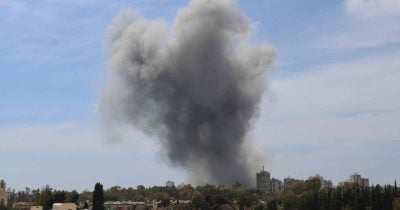
Vance's flight to Switzerland wasn't previously announced, and its timing coincides with a critical phase in indirect talks between Washington and Tehran. The overnight schedule suggests negotiators are racing to bridge gaps before a potential escalation. Rising regional tensions have added urgency — recent attacks on shipping in the Persian Gulf and a buildup of Iranian proxy forces have raised the stakes for both sides.
The vice president's role in the talks hasn't been detailed, but his presence in Switzerland puts a senior White House figure close to the negotiating table. The administration has kept the agenda tight, with no public readouts expected until after the overnight session.
Prediction market puts odds on a Witkoff outcome
Polymarket, the online prediction platform, assigned a 15.5% probability to an event involving Witkoff — a name that has surfaced in diplomatic circles but whose specific role or expected outcome remains unclear. The figure suggests traders see a low but nontrivial chance that a development linked to Witkoff emerges from the talks. Polymarket users have been actively trading contracts tied to the negotiations, with volumes spiking since Vance's departure was confirmed.
No official explanation ties Witkoff directly to the U.S.-Iran track. The 15.5% number is a market estimate, not a government assessment. Still, prediction markets have occasionally flagged outcomes that later proved accurate, and the probability is being watched by analysts who follow diplomatic betting trends.
Regional backdrop: why overnight talks matter
The overnight format is unusual for U.S.-Iran discussions, which have typically followed a daytime schedule in neutral locations. The all-night push reflects the gravity of the moment. Iran's nuclear program has advanced beyond previous thresholds, and the U.S. has said it seeks a diplomatic off-ramp but hasn't ruled out other options.
Switzerland has hosted U.S.-Iran talks before — it's a common venue because of its neutral status and diplomatic relations with both countries. But a vice-presidential visit while talks are still underway is a more direct signal of Washington's attention.
What happens after Monday's overnight session is uncertain. No follow-up meetings have been announced, and the White House has not said whether Vance will remain in Switzerland or return to Washington. The 15.5% Polymarket number, whatever it refers to, will either rise or collapse once the outcome is known.