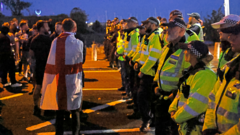
Thousands of supporters of jailed former Prime Minister Imran Khan are marching toward Pakistan's capital after talks between authorities and his party ended without a deal. The breakdown in negotiations, confirmed by both sides this week, sent crowds into the streets in a display of political force that the government had hoped to avoid. Khan remains in prison and was not part of the talks.
How the talks fell apart
Negotiations between Khan's party and government representatives had been billed as a chance to lower the temperature after months of tensions. They didn't. Neither side has offered a detailed account of what specifically caused the collapse, but the deadlock was enough to trigger the march. The timing is delicate. Pakistan is already juggling a fragile economic recovery and ongoing negotiations with the International Monetary Fund, and a prolonged street campaign is exactly what the government doesn't need right now.
📊 Market Data Snapshot
Khan's party has a long history of mobilizing large crowds quickly, and this week's turnout suggests that organizational muscle is still intact despite the pressure on its leadership. The march is not just a show of strength. It's a test of whether the party can sustain momentum without its founder on the ground.
Why the capital is the target
Marching on Islamabad is a deliberate choice. It forces the government to respond, whether by deploying security forces, entering fresh negotiations, or simply enduring the spectacle of protesters at its doorstep. Each option carries costs. A heavy-handed response risks inflaming the situation further. Another round of talks risks looking like a concession.
Authorities have not publicly outlined how they plan to handle the approaching crowds, and there's no firm timeline for when the marchers are expected to reach the city limits. That uncertainty is part of the pressure tactic.
The economic backdrop
Pakistan's financial situation makes the political standoff more than a domestic drama. The country has been working through IMF conditions and trying to stabilize its currency, and political instability has a way of complicating both. Investors tend to price in uncertainty before it shows up in official data, and a prolonged protest movement would do exactly that.
For crypto markets, the direct link is thin. Bitcoin and other major assets have barely reacted to the news, and there's no sign yet that this is spilling into digital asset trading. But Pakistan is one of the larger grassroots crypto markets in the world, and any serious economic shock there has historically pushed more people toward stablecoins and peer-to-peer trading as a hedge. That's a pattern worth watching, not a prediction.
What to watch next
The immediate question is whether the march reaches Islamabad and what happens when it does. If authorities try to block it, the standoff could escalate. If they allow it, the government hands Khan's party a visual victory. Either way, the deadlock that started this isn't resolved, and there's no sign of a new round of talks on the table. Until one side moves, the streets are doing the talking.