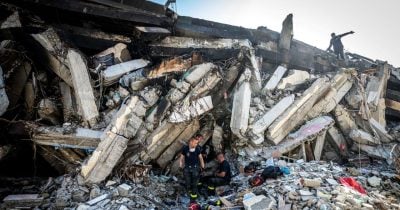
Latvia confirmed that its consulate in the eastern Ukrainian city of Sloviansk was destroyed in a Russian airstrike that killed five civilians. The attack marks a direct hit on a NATO member's diplomatic mission, raising the stakes for European security and potentially triggering a tougher EU response on sanctions.
The attack on Sloviansk
The consulate was struck during a broader Russian bombardment of the city. Five civilians died in the strike, according to Latvian officials. It's not clear whether any consulate staff were among the casualties. The building was reduced to rubble. Sloviansk, a city in the Donetsk region, has been under frequent shelling since Russia's full-scale invasion began in 2022. This is the first time a foreign diplomatic mission in Ukraine has been directly hit by a Russian attack.
Geopolitical risk for European markets
The incident raises the geopolitical risk profile for European markets. Investors are watching closely. A direct strike on a NATO member's consulate could be seen as a provocation, even if the alliance's mutual defense clause — Article 5 — hasn't been triggered. The attack comes at a time when European stocks have been volatile amid uncertainty over energy supplies and the war's trajectory. Any escalation could push markets lower, though the immediate impact may be limited if the EU's response is measured.
EU sanctions enforcement
The airstrike could trigger EU sanctions enforcement. The bloc already has multiple rounds of sanctions on Russia, targeting its energy sector, banks, and individuals. But enforcement has been uneven. Some member states have pushed for tougher measures, while others worry about economic blowback. This attack may give hawks the evidence they need to argue for stricter implementation — including closing loopholes that allow Russian oil to be sold above the price cap. The EU's foreign policy arm is likely to review the incident.
Whether the attack will lead to new sanctions remains an open question as EU officials weigh their next steps.