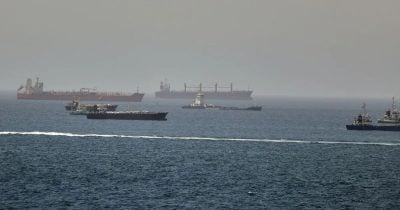
Morgan Stanley has warned that a prolonged closure of the Strait of Hormuz could tip the global economy into stagflation, sending energy prices soaring and roiling markets from stocks to crypto. The investment bank's analysis, released this week, notes that the strait handles about a fifth of the world's oil supply. A sustained disruption there would hit economic growth and lift inflation — a combination that historically spells trouble for risk assets, including cryptocurrencies.
Stagflation fears resurface
The warning lands as geopolitical tensions around the narrow waterway have already nudged crude higher. Morgan Stanley's economists modeled a scenario where the strait stays shut for several weeks. In that case, oil could spike past $130 a barrel, global GDP growth could slip by roughly one percentage point, and inflation would rise across developed economies. That stagflationary mix — stagnant growth plus persistent price pressures — is the kind of macro environment that tends to crush speculative demand.
Bitcoin and other digital assets have increasingly traded in sync with traditional risk-on markets. A sharp slowdown paired with higher energy costs would hit crypto from two directions: miners face steeper electricity bills, and traders pull back from volatile bets. The bank didn't offer a specific price forecast for Bitcoin or Ethereum, but the broader point is clear — crypto isn't insulated from a global energy shock.
Crypto's exposure to energy shocks
Proof-of-work mining, still the backbone of Bitcoin, is acutely sensitive to power prices. If the Strait of Hormuz closure pushes electricity costs higher, smaller mining operations could get squeezed. Meanwhile, stagflation tends to strengthen the US dollar, which historically weighs on crypto prices. Morgan Stanley's note didn't single out any mining firms or exchanges, but the risk is baked into the sector's fundamentals.
The timing isn't great. Crypto markets had been showing signs of recovery this spring after a rocky first quarter. A macro shock like this could reverse those gains. Traders are already watching oil futures and the dollar index for clues on how deep the damage might go.
Waiting for a resolution
No one knows how long the strait will stay closed. Diplomatic efforts are underway, but no breakthrough has been announced. For now, Morgan Stanley's report serves as a reminder that crypto lives inside the global economy — and that a chokepoint for oil is a chokepoint for everything else. The next concrete milestone to watch is any official statement from shipping authorities or Gulf state governments on reopening the waterway. Until then, the stagflation scenario remains a live risk for digital assets.