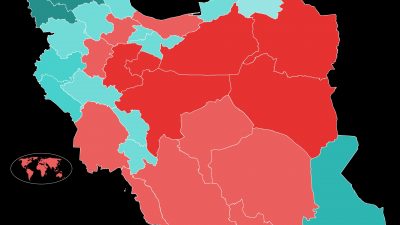
Benjamin Netanyahu has been pushing for a US-Iran conflict since the 1990s, and that long-standing campaign is now resurfacing as a key factor in Washington's policy calculations. Donald Trump became the first US president to align with Netanyahu's push, a shift that could complicate diplomatic efforts and rattle regional stability and markets.
A decades-long campaign
Netanyahu's advocacy for US military action against Iran dates back to the 1990s, when he was a rising political figure in Israel. Over the years, he has consistently argued that Iran's nuclear program and regional influence pose an existential threat that requires a forceful US response. His efforts have included private lobbying, public speeches, and diplomatic pressure on successive American administrations.
But until Trump, no US president fully embraced that approach. The Obama administration, for instance, pursued the 2015 nuclear deal with Iran, a move Netanyahu vehemently opposed. That deal was later abandoned by Trump, who instead adopted a policy of maximum pressure and aligned more closely with Netanyahu's confrontational stance.
Trump's alignment
Trump's decision to side with Netanyahu marked a clear break from previous US policy. He withdrew from the Iran nuclear deal, reimposed sanctions, and ordered the killing of Iranian General Qasem Soleimani in 2020. These actions escalated tensions and brought the US and Iran to the brink of direct conflict.
Netanyahu's influence on Trump's Iran policy was widely reported. The two leaders shared a close relationship, and Netanyahu's warnings about Iran's ambitions found a receptive audience in the White House. That alignment has now become a central issue in debates over how the US should handle Iran going forward.
Impact on diplomacy and markets
The persistence of Netanyahu's push could hinder diplomatic efforts to revive the nuclear deal or negotiate a broader agreement. Critics argue that his long-standing goal of a US-Iran conflict makes it harder for Washington to pursue a peaceful resolution. Any renewed confrontation would likely destabilize the Middle East, affecting oil prices, shipping routes, and investor confidence.
Market dynamics are already sensitive to Iran-related news. A spike in tensions could drive up energy costs and trigger volatility in global equities. The region's stability, already fragile after years of proxy wars and sanctions, would face additional strain.
The question now is whether the US can chart a course independent of Netanyahu's decades-old agenda. With diplomatic channels still open but fragile, the coming months will test whether Washington can resist the pull toward conflict that has been a constant feature of Netanyahu's political career.