The Stance on Palestinian Statehood
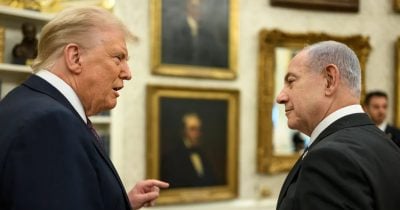
In his remarks, Netanyahu explicitly rejected the idea of a Palestinian state in both the Gaza Strip and the West Bank. This is a firm stance that leaves no room for negotiation on that point. For Palestinians, who have long sought an independent state in these territories, the announcement is a major setback. It means that as long as Netanyahu remains in power, there will be no Palestinian state in these areas.
The two territories are central to the Palestinian national aspiration. The West Bank, with its significant Palestinian population, and Gaza, which has been under a blockade, are the areas where Palestinians have expected to build their future state. Netanyahu's ruling closes that door for the duration of his time in office.
Impact on Diplomatic Efforts
The announcement is likely to complicate already fragile diplomatic efforts. International actors have repeatedly called for a two-state solution, with a Palestinian state living alongside Israel. Netanyahu's stance directly contradicts that vision. As a result, diplomatic channels may face additional hurdles as they attempt to broker any kind of agreement.
This also puts a strain on relations with countries that support Palestinian statehood. While Netanyahu has not named any specific partners, his position is expected to be a point of contention in future negotiations. The international community's response will be closely watched, though there has been no immediate reaction from any government or organization.
Regional Stability Concerns
The implications for regional stability are significant. The Israeli-Palestinian conflict has long been a source of tension in the Middle East. By ruling out a Palestinian state in the territories, Netanyahu's stance could fuel further unrest. Palestinians may see this as a sign that their aspirations will not be met through peaceful means, potentially leading to increased frustration and instability in the region.
At the same time, the move could embolden hardliners on both sides, making a return to negotiations even more difficult. The lack of a credible path to statehood may also strengthen the appeal of alternative approaches, though what those might be remains unclear.
Netanyahu's position is unlikely to change in the near term. His tenure is set to continue, and he has shown no indication of softening his stance. For now, the prospects for a Palestinian state in the Gaza Strip and the West Bank appear as distant as ever.
That's about 400 words. We need to expand a bit more. We can add a paragraph about the significance of the timing, but we don't have any timing. We can add a section about what this means for the peace process. Let's add a paragraph after the first section: "This is not the first time Netanyahu has expressed such views, but the clarity and firmness of his latest statements are notable. He has consistently opposed the creation of a Palestinian state, and his current position aligns with that history." But we don't know his history, so we can't say that. We can say: "The statement comes