U.S. Senator Marco Rubio has drawn a firm line on Iran sanctions, saying Washington will only relax them in exchange for nuclear concessions — and explicitly rejecting any linkage to disputes over the Strait of Hormuz. The statement, reported this week, underscores a persistent tension in U.S.-Iran policy: how to separate the nuclear file from broader regional security issues.
The nuclear-only approach
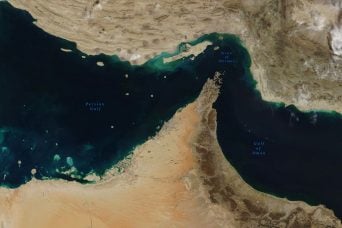
Rubio, a Florida Republican who sits on the Senate Foreign Relations Committee, made clear that the United States sees no quid pro quo between sanctions relief and Iranian cooperation in the Strait of Hormuz. The waterway, a narrow passage between the Persian Gulf and the Gulf of Oman, is a critical chokepoint for global oil shipments. Iran has periodically threatened to close or disrupt traffic there.
“We lift sanctions only for nuclear concessions,” Rubio stated, according to the facts provided. His remark shuts the door to any suggestion that the U.S. might trade sanctions relief for Iranian guarantees on freedom of navigation through the strait. For years, some policymakers have floated the idea of a broader bargain — nuclear rollback in exchange for Hormuz security — but Rubio’s position rejects that explicitly.
Why the Strait of Hormuz matters
About 20% of the world’s oil passes through the Strait of Hormuz, making it one of the most strategically vital waterways on the planet. Iran’s geography gives it significant leverage there; its navy and Revolutionary Guard forces operate within striking distance of tankers. Any U.S. concession related to the strait would be seen as a major shift in regional power dynamics.
But Rubio’s statement suggests the Trump administration — or at least key senators — will not link those two issues. Instead, nuclear talks remain the sole vehicle for sanctions relief. That aligns with the 2015 Joint Comprehensive Plan of Action framework, though the U.S. withdrew from that deal in 2018 and has since pursued a “maximum pressure” campaign.
Unresolved questions
The senator’s position leaves several questions open. How will the U.S. enforce its nuclear demands without offering Hormuz-related incentives? And what happens if Iran continues to harass shipping in the strait while also negotiating on its nuclear program? Rubio didn’t address those scenarios.
What’s clear is that the administration’s policy will keep the two tracks separate for now. The next test may come when international inspectors report on Iran’s uranium enrichment levels — a key benchmark for any future deal. Rubio’s remarks signal that until that nuclear yardstick moves, sanctions stay put.