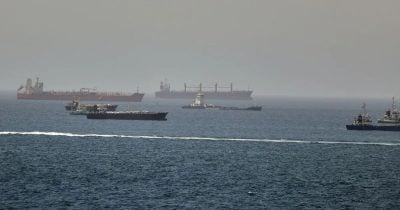
Senator Marco Rubio has warned that Iran may seize control of the Strait of Hormuz, a move that would upend global oil markets and complicate diplomatic efforts as US-Iran tensions escalate. The strait is a narrow but critical waterway through which roughly a fifth of the world's petroleum passes each day.
The strategic chokepoint
The Strait of Hormuz connects the Persian Gulf to the Gulf of Oman and is the only sea route for oil exports from Saudi Arabia, Iraq, Iran, Kuwait, the United Arab Emirates, and Qatar. Any disruption there would ripple through supply chains almost immediately. Rubio's warning highlights just how fragile that system is when geopolitical strains run high.
Iran has threatened to close the strait in the past but has never fully done so. Previous standoffs involved quick shows of naval force—usually by the U.S. Navy—and back-channel negotiations. This time feels different, Rubio suggested in his statement, though he offered no specific evidence of an imminent move by Tehran.
What a blockade would mean
If Iran were to block or mine the strait, oil prices would spike hard and fast. The market already has a thin buffer of spare production capacity, mostly in Saudi Arabia and the United Arab Emirates. Even a partial closure could force tankers to take longer, costlier routes, driving up fuel costs worldwide.
Beyond the economics, a blockade would be a direct challenge to the U.S. Navy's freedom of navigation—something Washington has historically answered with force. That would push diplomatic efforts deeper into crisis mode. The Biden administration has been seeking a new nuclear deal with Iran, but any overt move in the strait would likely end those talks.
Rubio's warning in context
Rubio's comments come as the U.S. and Iran trade accusations over drone strikes, nuclear enrichment, and proxy forces in the Middle East. The senator, a Republican on the Foreign Relations Committee, often criticizes the administration's approach as too soft. His warning may also be a political signal—pushing the White House to take a harder line before the situation worsens.
No official response from Tehran has followed, and the State Department declined to comment on Rubio's specific remarks. But the warning alone puts the strait back in the headlines, reminding markets and policymakers that the world's oil supply still runs through a very narrow passage.
For now, the question is whether Iran is bluffing—or testing just how far it can push before the U.S. responds. The next few weeks may provide an answer.