Saudi Arabia, Pakistan, and Turkey have signed off on a new collective defense arrangement called the Mecca pact. The three governments announced the agreement this week, framing it as a mutual security commitment that could redraw the map of regional alliances and offer a stabilizing hand in the Gulf.
What the pact actually does
The details are thin, and that's by design. Officials from the three capitals have said only that the pact is built around collective defense — meaning an attack on one is treated as an attack on all. No troop numbers, no joint command structure, no specific threat list has been made public.
What is clear is that the pact brings together three very different militaries. Saudi Arabia has the Gulf's largest defense budget and hosts U.S. bases. Pakistan fields a large army and is the only Muslim-majority nuclear power. Turkey, a NATO member, has the region's most active expeditionary force and a drone industry that's reshaped several conflicts.
The name itself is a signal. Mecca, Islam's holiest city, sits in Saudi territory. Choosing it as the label ties the alliance to religious legitimacy, not just geopolitics.
Why the Gulf matters right now
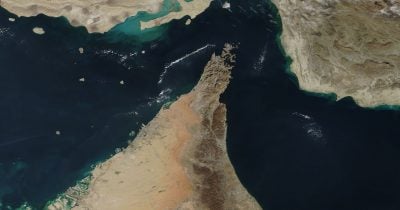
The Gulf has been on edge for years. Shipping lanes have been disrupted, oil infrastructure attacked, and rival blocs have hardened. The Mecca pact doesn't name an adversary, but the timing suggests a response to that pressure.
For Saudi Arabia, the deal adds a second layer of security beyond its traditional U.S. partnership. For Pakistan, it deepens ties with the Gulf's wealthiest states, which have long employed Pakistani workers and supported its economy. For Turkey, it opens a formal military channel into the Arabian Peninsula, where Ankara has often been seen as a rival to Riyadh.
Whether those three can coordinate effectively is another question. Their strategic interests don't always line up. Turkey and Saudi Arabia have backed opposite sides in regional disputes over the past decade. Pakistan's military is heavily focused on its eastern border with India, not the Red Sea.
Potential ripple effects across the region
If the pact holds, it could change how smaller Gulf states calculate their own security. Several have relied on a U.S. security umbrella, but Washington's commitment has seemed less certain in recent years. A bloc anchored by three large Muslim-majority states offers an alternative — one that doesn't depend on American politics.
It could also put pressure on Iran, which shares a maritime border with Saudi Arabia and has its own network of allied militias. The Mecca pact doesn't mention Iran, but collective defense pacts in this neighborhood are rarely written without a specific threat in mind.
The pact may also complicate existing alliances. Turkey is in NATO, and NATO's Article 5 commits members to defend each other. If Turkey ever invoked the Mecca pact in a conflict, it would raise questions about overlapping obligations — something no one in Ankara, Islamabad, or Riyadh has addressed publicly.
What happens next
The three governments have not set a date for a first joint military exercise or a formal implementation plan. The pact exists on paper, but paper doesn't stop missiles.
Observers will be watching for the first concrete step — a command post, a joint patrol, a defense minister meeting with a published agenda. Until then, the Mecca pact is a statement of intent. Whether it becomes a working alliance depends on how quickly the three capitals move from ceremony to action.