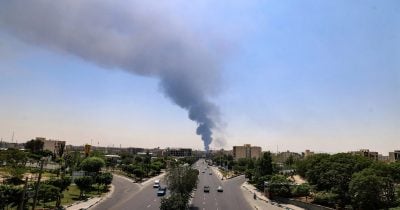
Saudi Arabia's crown prince is pushing for talks, not military action, as the United States and Iran edge closer to confrontation. The prince's preference for de-escalation signals a cautious approach from a key regional player that has often backed a harder line against Tehran.
Why Talks Over Strikes?
The crown prince's stance comes at a moment when the White House has threatened strikes over Iran's nuclear program and its proxies' attacks on U.S. forces. A military campaign risks drawing Saudi Arabia into a wider war it can ill afford. The kingdom is still recovering from years of conflict in Yemen and faces economic pressures tied to its Vision 2030 reform plan. A diplomatic path, the prince believes, offers a way to contain Iran without the chaos of open conflict.
That calculation isn't new. Riyadh has long viewed Tehran as a rival, but the crown prince has also signaled openness to dialogue when it serves Saudi interests. The current preference for talks reflects a pragmatic read of the region: direct strikes could disrupt oil markets, endanger Saudi infrastructure, and give Iran an excuse to escalate through its network of militias.
The US-Iran Standoff
Tensions between Washington and Tehran have spiked in recent weeks. The U.S. has accused Iran of supplying drones and missiles to Russia for use in Ukraine, while Iran has pushed ahead with uranium enrichment beyond the limits of the 2015 nuclear deal. The Biden administration has tried a mix of sanctions and back-channel diplomacy, but hardliners in both capitals have made progress difficult.
Reports of possible U.S. strikes on Iranian nuclear sites have circulated, though no official decision has been announced. The crown prince's preference for talks adds a voice of restraint from a country that hosts American troops and is often seen as a U.S. ally in the region. It's a reminder that even close partners may not want to see the U.S. pull the trigger.
Saudi Arabia's Balancing Act
The kingdom has its own reasons to avoid war. It relies on stable oil prices, which a conflict would upend. It also needs U.S. security guarantees but doesn't want to be dragged into a fight it didn't choose. Meanwhile, Saudi Arabia has been rebuilding ties with Iran after a China-brokered deal last year, restoring diplomatic relations after a seven-year rupture. That detente is fragile, and a U.S.-Iran war would shatter it.
The crown prince's position doesn't mean he's soft on Iran. He has backed a tough line on Tehran's nuclear ambitions and its support for the Houthis in Yemen. But he's also shown he can shift course when the cost of confrontation gets too high. The question now is whether Washington will listen.
No timeline has been set for any U.S. decision on strikes. The crown prince's preference for talks is a signal, not a policy. Whether it shapes the White House's next move remains an open question.