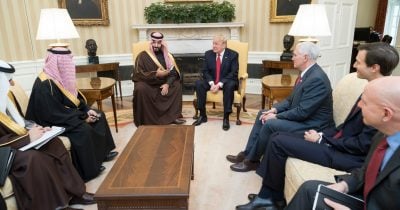
Saudi Arabia's crown prince directly warned then-President Donald Trump about planned strikes on Iran during a 2026 conflict, according to information obtained by GFdaily. The warning highlights the fragile balance of power in the region and raises questions about how such a move could complicate diplomatic efforts and rattle global markets.
Why the warning matters
The crown prince's message came at a time of heightened tensions between the U.S. and Iran. The 2026 conflict had already drawn in multiple regional actors, and a direct strike on Iranian soil risked escalating into a broader war. Saudi Arabia, a key U.S. ally, has long walked a tightrope between Washington and Tehran. The warning suggests Riyadh saw the planned strikes as a step too far — one that could destabilize the entire Gulf.
Details of the warning remain sparse. Neither the crown prince nor Trump has publicly commented on the exchange. But the fact that it happened at all underscores the behind-the-scenes maneuvering that often shapes Middle East policy.
A fragile regional balance
Saudi Arabia's caution is rooted in its own security concerns. The kingdom shares borders with Iraq and is within missile range of Iran. A U.S.-Iran military confrontation could spill over, threatening Saudi oil infrastructure and civilian areas. The crown prince's warning may have been an attempt to protect his country's interests — even if it meant pushing back against a U.S. president.
The move also reflects a shift in Saudi foreign policy. In recent years, Riyadh has sought to de-escalate tensions with Iran through backchannel talks and regional diplomacy. A U.S. strike would have undercut those efforts, potentially reigniting proxy conflicts in Yemen, Syria, and Lebanon.
Diplomatic complications
If the warning becomes public knowledge, it could strain U.S.-Saudi relations. The Trump administration had taken a hard line on Iran, withdrawing from the nuclear deal and imposing sanctions. A Saudi intervention against a strike would be seen as a break with that policy. Future administrations may find it harder to coordinate with Riyadh on Iran if trust is eroded.
On the other hand, the warning could be viewed as a sign of Saudi maturity — a willingness to prioritize regional stability over alliance loyalty. That might open the door to more independent Saudi diplomacy, but it also risks alienating Washington.
Market stability at risk
Oil markets are particularly sensitive to any hint of conflict in the Gulf. A U.S. strike on Iran would almost certainly send crude prices soaring. Saudi Arabia's warning suggests the kingdom was trying to prevent that outcome. But the very existence of such a warning indicates that the situation was more volatile than publicly known.
Investors are now left wondering what other warnings have been issued — and ignored. The 2026 conflict already disrupted global supply chains. Any further escalation could push the world economy into a recession.
How the warning will shape future U.S.-Saudi coordination is an open question. Neither side has confirmed the exchange, and the full context of the 2026 conflict remains classified. What is clear is that the crown prince chose to speak up — and that choice carries consequences for diplomacy, security, and markets.