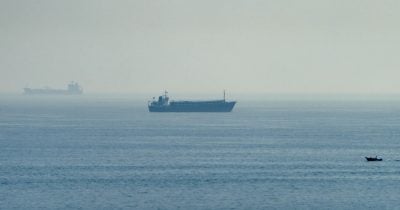
Iran and the United States are at odds over passage rights through the Strait of Hormuz, a confrontation that could drag global oil markets and maritime security into a period of prolonged instability. The dispute, which centers on who controls access to the narrow waterway, has already raised alarms among traders and shipping companies that rely on the route for a significant share of the world's crude oil.
The stakes at the strait
The Strait of Hormuz connects the Persian Gulf with the Gulf of Oman and the open ocean. It is a narrow passage, barely wide enough for ships to navigate without careful coordination, and it sits directly between Iran and Oman. Oil tankers moving out of Saudi Arabia, Iraq, Kuwait, and the United Arab Emirates pass through it on their way to markets in Asia, Europe, and beyond. Any disruption there would not just delay shipments — it would send shockwaves through supply chains and price benchmarks worldwide.
The current tension revolves around passage rights. Iran has long insisted on its authority to regulate traffic through its territorial waters, while the United States and other naval powers argue that international law guarantees free transit for all vessels. That legal disagreement has now become a political flashpoint, with both sides showing little willingness to back down.
What the dispute is about
Passage rights are not a new issue, but they have gained urgency in recent months as diplomatic channels between Washington and Tehran have narrowed. The Iranian government has repeatedly warned that it could restrict movement through the strait if its own security concerns are not addressed. The United States, in turn, has deployed naval assets to the region and signaled that it will not tolerate any interference with commercial shipping.
Neither side has made a decisive move that would close the waterway, but the rhetoric alone has been enough to unsettle markets. Shipping companies are already factoring in higher insurance premiums for voyages through the region, and some have started to look for alternative routes — though none are practical for the volume of oil that flows through Hormuz.
Oil market fallout
Oil prices are sensitive to any hint of supply disruption, and the Hormuz dispute is a direct threat to supply. Even the possibility of a blockade or a series of harassment incidents could push prices higher, as traders price in the risk of delayed or lost cargoes. A prolonged standoff would likely mean sustained volatility, with prices swinging on every piece of news about the strait.
The impact would not be limited to crude itself. Refined products, natural gas, and other goods shipped through the waterway would also face delays, adding to costs across industries that depend on timely deliveries. For countries that rely heavily on Gulf oil — including many in Asia — the stakes are especially high, since they have limited ability to source crude from elsewhere on short notice.
Maritime security concerns
Beyond oil, the dispute raises broader questions about the safety of one of the world's busiest shipping lanes. Military confrontations, even accidental ones, could put commercial vessels in the crossfire. Crews on tankers and cargo ships would face heightened risk, and insurance providers might reconsider coverage for the area altogether.
Naval patrols from multiple countries are already active in the region, but they operate under competing rules of engagement. A single miscalculation — a warning shot, a boarding attempt, a cyberattack on navigation systems — could escalate into a larger conflict that no one wants but everyone fears. The result would be a security vacuum that benefits no one, least of all the shipping companies that keep global trade moving.
For now, the situation remains tense but contained. Traders and shipowners will be watching closely for any new restrictions or incidents in the coming weeks, knowing that the margin for error is slim. Whether the two sides can find a way to ease the standoff without a crisis is an open question, and the answer will shape the cost of oil and the safety of the seas for a long time to come.