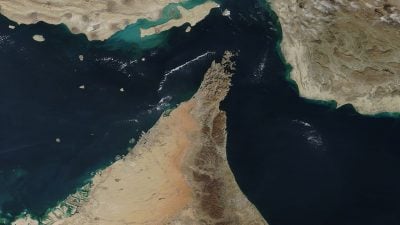
The shifting dynamics in the Strait of Hormuz could destabilize regional security and rattle global oil markets, complicating diplomatic efforts between Washington and Tehran. According to a Washington Post report, Tehran is at a disadvantage in the evolving US-Iran dynamics in the strategic waterway.
The Strategic Waterway
The Strait of Hormuz is a narrow passage that connects the Persian Gulf to the open ocean. It's a vital route for oil tankers, and any disruption there tends to send ripples through energy markets. For years, the strait has been a flashpoint for tensions between Iran and the United States, with both sides jockeying for influence.
Now, the balance appears to be shifting. The Washington Post's reporting suggests that Iran is not in a strong position as the two countries navigate their interests in the strait. That's a notable development, given how much of Iran's leverage in regional disputes has historically been tied to its ability to threaten or control the waterway.
Tehran's Disadvantage
The Post's analysis points to a Tehran that's struggling to keep pace with the evolving US-Iran dynamics. While the report doesn't spell out every detail, it makes clear that Iran's options are narrowing. That could have consequences for how Iran approaches negotiations, both with the US and with other Gulf states.
It's not just about military posturing. The strait is also a key economic artery. If Iran feels cornered, it might be tempted to take risks that could disrupt shipping lanes. That's a scenario that oil traders and shipping companies are likely watching closely.
Oil Market Fallout
Any instability in the strait has the potential to impact global oil markets. The region is responsible for a significant share of the world's crude exports, and even the threat of disruption can cause prices to fluctuate. The report's findings add another layer of uncertainty to an already volatile market.
For consumers, that could mean higher prices at the pump. For businesses, it could mean higher input costs. The ripple effects could be felt far beyond the Middle East, touching economies that depend on stable energy supplies.
Diplomatic Complications
The shifting dynamics also complicate diplomatic efforts. If Tehran is at a disadvantage, it may be less willing to compromise, or it may double down on hardline positions. That makes it harder for diplomats to find common ground on issues like the nuclear program or regional security.
The US, for its part, may see an opportunity to press its advantage. But that could backfire if it pushes Iran into a corner. The situation is delicate, and the margin for error is thin.
The Washington Post report doesn't offer a clear path forward. It simply lays out the reality: Tehran is on the back foot in the strait, and that has implications for everyone. The next move, whether from Washington, Tehran, or the oil markets, will be telling.