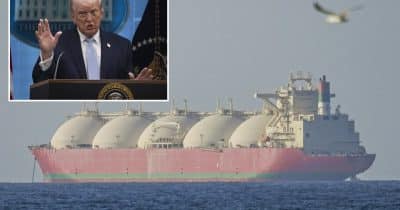
Donald Trump and Iran's president signed a memorandum of understanding on June 17 aimed at ending the Middle East war. The deal pairs uranium dilution with economic relief, offering a potential off-ramp to a conflict that has reshaped regional alliances.
What the MOU Covers
The MOU, signed by both leaders, establishes a framework to halt hostilities in exchange for measurable steps on Iran's nuclear program. Under the terms, Iran will begin diluting its enriched uranium stockpile, a process that reduces the material's ability to be weaponized. In return, economic sanctions relief will be phased in, tied to verifiable progress on dilution.
Neither side released the full text of the memorandum, but officials from both governments described the agreement as a direct swap: uranium reduction for financial breathing room. The deal does not address other aspects of the war, such as territorial disputes or the role of proxy forces, leaving those to later negotiations.
The Uranium Dilution Commitment
Uranium dilution is a technical process that blends enriched uranium with a less-concentrated form, lowering its purity. Iran has previously used dilution as a confidence-building measure in past nuclear talks. Under the new MOU, the country must dilute a significant portion of its near-weapons-grade stockpile, monitored by international inspectors.
Inspectors from the International Atomic Energy Agency are expected to verify the dilution. The facts do not specify a timeline for completion, but the economic relief will be disbursed in tranches as each dilution milestone is met. The goal is to ensure that Iran cannot quickly produce a nuclear weapon while the war winds down.
Economic Relief for Iran
Iran's economy has been battered by years of sanctions and the costs of the war. The MOU promises relief in the form of unfrozen assets and permission to export oil, though exact amounts were not disclosed. The economic component is critical for Iran's leadership, which faces public pressure to deliver tangible benefits.
Trump's role in the agreement marks a reversal of his earlier policy of maximum pressure. During his presidency, he withdrew from the 2015 nuclear deal and reimposed sanctions. The MOU suggests a shift toward direct bargaining, with both sides conceding ground to end the war.
What Comes Next
Implementation hinges on setting up verification mechanisms and a timeline for sanctions relief. The MOU itself is a starting point, not a final treaty. Negotiators are expected to meet again within weeks to hammer out details on monitoring, asset releases, and a permanent cease-fire. The unresolved question is whether the deal can hold without addressing deeper grievances, including Iran's missile program and regional military presence. For now, the ink on the MOU is dry, but the hard work of making it stick lies ahead.