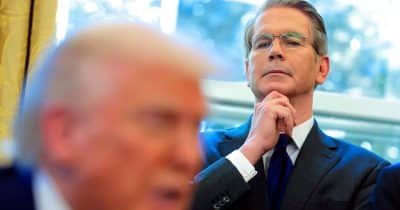
President Donald Trump on Tuesday announced a preliminary peace deal with Iran, a diplomatic breakthrough that could redraw the Middle East's political map and send ripples through global oil markets. In remarks following the announcement, Trump joked about who would get credit — or blame — as the deal moves forward.
What the preliminary deal entails
The agreement, described by Trump as a first step, lays the groundwork for broader negotiations. Details remain scarce, but the administration framed it as a framework for de-escalation after years of tension over Iran's nuclear program and its regional military activities. The preliminary nature means much of the heavy lifting lies ahead: both sides will need to agree on verification mechanisms, sanctions relief, and a timeline for implementation.
Trump's remarks on credit and blame
During the announcement, Trump made light of the political risks involved. He said he would take full credit if the deal succeeds, but suggested that others — he did not name them — would be blamed if it falls apart. The joke underscored the high stakes: a final agreement could be a signature foreign-policy achievement, while failure could reignite hostilities and invite criticism from hawks in both parties.
Impact on oil markets
News of the preliminary deal sent oil prices lower in early trading. Analysts noted that any relaxation of sanctions on Iranian crude exports could add supply to a market already wrestling with OPEC+ production cuts and slowing demand from China. Iran holds some of the world's largest oil and gas reserves, and even a gradual return of its exports could knock several dollars off a barrel. The deal's preliminary stage, however, means traders are still pricing in uncertainty.
Regional power dynamics in flux
The agreement could shift alliances across the Middle East. Saudi Arabia and Israel, both longtime adversaries of Iran, have watched the negotiations warily. A U.S.-Iran détente may reduce the need for Gulf states to rely on American military protection, while giving Tehran more room to project influence through proxies in Yemen, Syria, and Lebanon. The preliminary deal does not address those proxy networks directly, leaving a key source of regional tension unresolved.
European allies, who have pressed Washington to re-engage diplomatically with Tehran, welcomed the announcement. But they also stressed that the preliminary deal must lead to verifiable curbs on Iran's nuclear enrichment, which has accelerated in recent years.
The coming weeks will test whether the framework can hold. Neither side has set a deadline for formal talks, and Trump offered no timeline for when a full agreement might be signed. For now, the world watches — and waits to see who ultimately earns credit, or blame.