President Trump has confirmed the existence of a backchannel with Iran, a disclosure that lands as the administration also issued a warning to Oman in the middle of rising Strait of Hormuz tensions. The two moves, made public in quick succession, paint a contradictory picture of an administration pressing for talks while also tightening the screws on Gulf allies.
The backchannel and what it signals
Trump's confirmation that a private line of communication with Tehran exists is the clearest acknowledgment yet of a diplomatic track running parallel to the public standoff. For months, the administration has oscillated between bellicose rhetoric and hints of willingness to negotiate. The backchannel, if it leads anywhere, could mark a genuine opening after years of near-zero direct contact between Washington and the Iranian government.
That's a big if. Backchannels are fragile by nature, often used to test the waters without committing either side. They can produce breakthroughs or quietly dissolve without a handshake. What's notable here is that Trump chose to confirm it at all, a signal in itself that he wants the world to know a lane for dialogue exists.
The warning to Oman
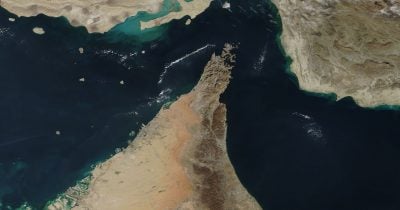
At the same time, Oman received a pointed warning from the White House. The sultanate sits at the mouth of the Persian Gulf, its coastline brushing the Strait of Hormuz, the narrow waterway through which a fifth of the world's oil passes. A warning to Muscat is not a courtesy note. It's a message about where the administration draws its lines, and it raises the stakes for a country that has long played the role of regional mediator.
The two moves don't cancel each other out, but they do sit in tension. One suggests a path away from confrontation. The other suggests Washington is prepared to lean on its partners as it navigates a potential flashpoint. For Oman, being warned by Washington while also being seen as a possible go-between for Iran is a delicate position, and not one the sultanate asked for.
Regional stakes and mixed signals
Strait of Hormuz tensions are not theoretical. Any disruption there ripples through global energy markets within hours, and the region's smaller states have spent years trying to avoid being caught between Washington and Tehran. Oman has historically managed that balancing act better than most, which is precisely why a warning from Trump matters. When the administration singles out a friendly state, it usually means Washington believes that state is not fully aligned with its posture.
What the backchannel actually covers remains unclear. It could be narrowly scoped, perhaps focused on freeing detained Americans or containing a specific flashpoint. It could also be broader, an attempt to open a real negotiation over Iran's nuclear program and regional behavior. The facts available don't say, and filling that gap with speculation would be guesswork.
The public record shows only this: a backchannel exists, and the president confirmed it. A warning went to Oman, and the president delivered it. Both are real. Both carry weight. And both come with unresolved questions that will shape what happens next.
The immediate test is whether the backchannel produces anything tangible — a meeting, a prisoner release, a de-escalation of some kind — or whether it remains a diplomatic ghost, acknowledged but never substantiated. The warning to Oman, meanwhile, leaves its own question hanging: what did Washington actually ask for, and what happens if Muscat doesn't deliver?