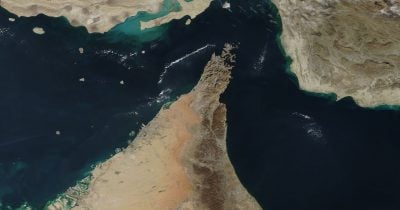
President Trump has declared the Strait of Hormuz open, with the U.S. Navy asserting control over the strategic waterway. The declaration could reshape U.S.-Iran relations and has immediate implications for global oil markets and regional stability.
A Vital Oil Artery
The Strait of Hormuz sits between the Persian Gulf and the Gulf of Oman. It's a narrow passage that carries a large share of the world's seaborne oil. Tankers moving crude from Saudi Arabia, Iraq, the UAE, and other Gulf producers pass through it daily. Any disruption here tends to send prices climbing.
Trump's statement that the strait is open under U.S. Navy control is a direct signal that Washington intends to keep that traffic moving. The Navy's presence is meant to guarantee freedom of navigation, a mission that has been a cornerstone of U.S. policy in the region for decades.
What U.S. Navy Control Means
Control in this context doesn't mean a formal blockade or occupation. It means the U.S. Navy is operating in the area with enough force to deter interference. That could involve patrols, escort missions, or a visible carrier presence. The practical effect is that commercial shipping can continue without the threat of being stopped or attacked.
For the Navy, this is a familiar role. It has escorted tankers through the strait before, especially during periods of tension with Iran. The new declaration formalizes that posture, putting the world on notice that the U.S. will not tolerate closures or harassment.
The Iran Factor
Iran has long viewed the strait as a lever it can pull when under pressure. Iranian officials have threatened to block it in response to sanctions or military action. Trump's declaration is a direct challenge to that leverage.
The move could escalate tensions between Washington and Tehran. Iran may see the U.S. Navy's control as a provocation, and respond with increased patrols of its own or warnings to shipping. The risk of a miscalculation is real. A single incident in the strait could spiral into a broader conflict.
At the same time, the declaration might be a negotiating tactic. By asserting control, the U.S. is showing it can act without Iranian permission. That could push Iran to the table, or it could harden its position. The next few weeks will reveal which way the wind blows.
Oil Markets and Regional Stability
Global oil markets are watching closely. The strait's status directly affects supply expectations. If traders believe the U.S. Navy will keep it open, they may hold off on panic buying. But if the situation looks fragile, prices could spike.
Regional stability is also at stake. The strait is not just an energy route; it's a symbol of power in the Gulf. The U.S. Navy's control sends a message to allies and adversaries alike. Saudi Arabia and other Gulf states may feel reassured, while Iran and its proxies may feel encircled.
The declaration doesn't resolve the underlying tensions. It sets the stage for the next move. Whether Iran accepts the new reality or tests the Navy's resolve is the open question. The answer will come in the form of shipping traffic, diplomatic statements, and possibly military maneuvers in the days ahead.