President Trump has demanded that Iran pay reparations, a move that threatens to escalate tensions between Washington and Tehran just as negotiations over the Strait of Hormuz are gaining traction. The demand, which carries no specified amount or mechanism, has injected fresh uncertainty into an already fragile diplomatic channel. It also ripples outward into global energy markets, where traders are watching every signal from the region.
A Demand With No Price Tag
The White House has not detailed what form the reparations would take or how they would be calculated. That ambiguity is itself a problem, according to people familiar with the matter. Iranian officials have not publicly responded to the demand, but the lack of specifics leaves room for interpretation — and for escalation.
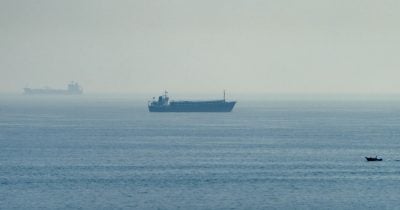
Trump's statement lands at a delicate moment. The Strait of Hormuz, a narrow waterway between Iran and Oman, carries roughly a fifth of the world's oil supply. Any disruption there sends shockwaves through crude prices. The demand for reparations, whatever its intended purpose, adds a new layer of unpredictability to an already volatile standoff.
Talks in the Balance
Negotiations over the Strait of Hormuz have been described by diplomats as preliminary but promising. The reparations demand complicates those talks by introducing a new precondition that Tehran is unlikely to accept without a fight. It's not clear whether the demand is a negotiating tactic or a firm position, but either way, it shifts the goalposts.
The timing matters. Both sides have signaled a willingness to keep talking, but each new provocation makes it harder for negotiators to sell a deal to their respective audiences. For Washington, the demand may play well domestically. For Tehran, it reinforces the narrative that the U.S. is not negotiating in good faith.
Energy Markets on Edge
Oil traders have been here before. Every escalation in the Gulf tends to produce a brief spike in crude prices, followed by a pullback when the crisis fades. The reparations demand is no different — benchmark prices ticked up on the news, though the move was modest.
The bigger risk is longer-term. If the demand hardens into a precondition for talks, the diplomatic track could stall entirely. That would leave the region without a safety valve, and the next incident — a tanker seizure, a drone strike, a stray missile — could trigger a sharper market reaction than the last one.
For now, the situation remains fluid. The demand has been made, but no timeline has been set for a response. Iran has not walked away from the talks, and the U.S. has not said what happens if Tehran refuses to pay. The next move is unclear, and that uncertainty is the one constant in a region where the stakes are measured in barrels and in lives.