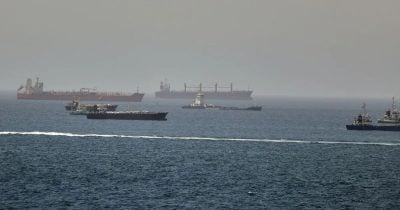
President Trump on Monday dismissed the latest threat from Iran and reaffirmed his administration’s policy of maintaining a blockade of the Strait of Hormuz. The move signals a hardening of the U.S. position and raises the risk of a direct military confrontation in the Persian Gulf.
Why the Strait of Hormuz Matters
The Strait of Hormuz is a narrow waterway that sees about a fifth of the world’s oil shipments pass through each day. Trump’s stance keeps the possibility of a blockade alive — a step that would choke the flow of crude from Saudi Arabia, Iraq, the United Arab Emirates and other Gulf producers. Iran has long threatened to close the strait in retaliation for U.S. sanctions, but Trump’s dismissal of that threat suggests he is unwilling to back down.
Heightened Risk of Military Conflict
Trump’s decision to hold the blockade position comes as he publicly brushed aside Iranian warnings. The combination of rhetorical defiance and strategic posture is what analysts say could push the two sides closer to open conflict. Any attempt by the U.S. Navy to enforce a blockade would almost certainly meet resistance from Iran’s Revolutionary Guard, which operates fast-attack boats and anti-ship missiles along the coast. Even a minor skirmish could spiral into a broader war.
Global Oil Markets on Edge
Oil traders are already pricing in the risk. The blockade stance injects uncertainty into a market that is still adjusting to supply cuts and fluctuating demand. A disruption at Hormuz would send prices spiking, hitting economies worldwide. So far, the Trump administration has not outlined a contingency plan for keeping oil flowing if the crisis escalates.
The regional fallout is equally concerning. Gulf states that rely on the strait for exports are caught between Washington and Tehran. Their own security could be compromised if the situation deteriorates. Saudi Arabia and the UAE have other pipeline routes, but none can fully replace the capacity of the Hormuz passage.
Trump’s team has not indicated any change in course. The coming weeks will test whether diplomatic channels can reopen or whether the blockade stance is a prelude to something more dangerous.