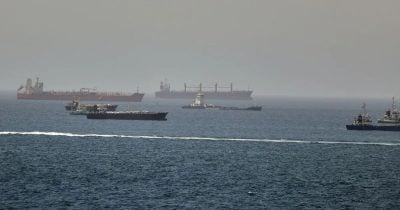
President Donald Trump has elevated the reopening of the Strait of Hormuz to a top strategic objective as tensions with Iran continue to simmer. The narrow waterway, a chokepoint for roughly a fifth of the world's oil shipments, has been at the center of the conflict for weeks.
Why the Strait of Hormuz Matters
Stretching between the Persian Gulf and the Gulf of Oman, the Strait of Hormuz is only 21 miles wide at its narrowest point. Tankers carrying crude from Saudi Arabia, Iraq, the UAE, Kuwait, and Iran itself must pass through it to reach global markets. Any disruption sends shockwaves through energy prices and supply chains.
Iran has long threatened to block the strait in retaliation for sanctions or military pressure. The current conflict has seen skirmishes and seizures near the waterway, though Tehran has not fully shut it down. Trump’s focus now is on ensuring it stays open — or reopening it if it has been effectively closed by Iranian actions.
Trump’s Strategy
The president has signaled a two-pronged approach: increased naval presence and diplomatic pressure. The U.S. Navy’s Fifth Fleet, based in Bahrain, has stepped up patrols. Meanwhile, administration officials are working with allies to form a coalition to guarantee safe passage.
Trump has not publicly detailed the timeline for reopening, but he has made clear that allowing Iran to control access to the strait is not an option. The Strait of Hormuz is not just an economic asset — it’s a strategic one. Control of it gives Iran leverage, something Trump has vowed to eliminate.
What’s at Stake for Oil Markets
Oil prices have already risen on the uncertainty. Traders are watching for any sign of actual closure. If the strait were to be fully blocked, analysts estimate crude could spike by double digits in days. The U.S. has domestic reserves and alternative suppliers, but Asia and Europe are heavily dependent on Gulf oil.
Trump’s prioritization of the strait suggests he sees it as a direct threat to global stability. The next steps will likely involve a mix of public diplomacy and private back-channel talks with Iran. For now, the president has put the reopening at the top of his agenda.