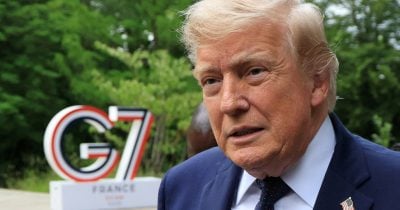
President Donald Trump said Thursday that the new Iran deal does not include immediate sanctions relief, deferring key decisions to later phases of the agreement. The phased approach, he argued, keeps U.S. leverage over Iran intact — and the announcement is already sending ripples through global markets, including crypto.
Why the deferral matters
The deal's structure means sanctions won't lift right away. Instead, relief is tied to future benchmarks, which Washington can still control. That gives the U.S. room to adjust pressure based on Iran's compliance — or lack of it. For markets, it's a signal that uncertainty around Middle East tensions won't fade quickly. Oil prices have already ticked up; broader risk assets are watching closely.
For crypto, the stakes are indirect but real. Bitcoin and other digital assets have often reacted to geopolitical shocks and shifts in dollar liquidity. A drawn-out sanctions regime can push some traders toward alternative stores of value, but it can also spook risk appetite if the broader economy wobbles.
What traders are watching
The announcement landed during a quiet week for crypto headlines, but volumes picked up on major exchanges after the statement crossed the wires. No panic — just a repositioning. Some investors are hedging with stablecoins; others are increasing exposure to decentralized finance protocols that sit outside traditional sanctions frameworks.
That's not a new playbook, but the timing matters. The U.S. has been signaling tougher oversight of digital assets all year, and this deal reinforces the message that Washington is willing to use economic statecraft — including tools that touch crypto — to pursue foreign policy goals.
Regulatory signals
Trump's remarks didn't mention crypto directly, but the subtext is clear: the administration sees digital assets as part of the broader financial landscape it wants to manage. The Treasury's Office of Foreign Assets Control (OFAC) has already sanctioned crypto addresses tied to Iranian entities. This deal keeps that door open.
Industry lawyers say the phased approach could mean more guidance on what counts as sanctions-evasion in crypto — and what doesn't. The next few months will likely bring clarifying statements from OFAC or FinCEN.
For now, the market is taking a wait-and-see stance. The real test comes when the first phase deadlines hit later this year. If negotiations stall, the uncertainty could hang over risk assets — including crypto — for months.